
Most people understand that food affects how they feel. Far fewer have fully absorbed that beverages do too - often more directly, more quickly, and more consequentially than anything they eat.
Pay attention to how you feel for one complete day.
Not your mood in the abstract sense - your actual, hour-by-hour experience of energy, mental clarity, emotional steadiness, and physical comfort. The way your mind feels at 9am versus 2pm versus 7pm. The quality of your attention during a demanding task. The specific texture of the fatigue that arrives in the afternoon. The ease or difficulty of the transition from work to evening. The quality of the sleep that ends the day and shapes the next one.
Now think about what you drank during that day.
The coffee before the 9am sharpness. The soda or energy drink before the afternoon crash. The wine before the evening that starts pleasant and ends in impaired sleep. The lack of water before the mid-morning brain fog that you attributed to stress or poor sleep or just the difficulty of the work.
The connection between what you consumed and what you experienced is not coincidental. It is direct, measurable, biochemical, and - once you understand the specific mechanisms - genuinely navigable. You can't always control what life demands of you on any given day. But you have enormous influence over how your brain and body respond to those demands, and a significant portion of that influence runs directly through the beverages you choose.
This guide traces those connections explicitly - not as wellness inspiration but as practical biochemistry translated into usable insight. Understanding why certain drinks make you feel certain ways is the foundation for building a daily beverage practice that genuinely supports how you want to feel rather than accidentally undermining it.
The Speed Advantage of Beverages Over Food
Before getting specific about which beverages affect which feelings and how, it's worth understanding why beverages affect mood, energy, and cognition so quickly - often within minutes rather than the hours that solid food requires.
When you eat solid food, the compounds in it - nutrients, botanicals, pharmaceuticals - must survive digestion before absorption. The stomach acids, digestive enzymes, and transit time through the gastrointestinal tract mean that even fast-acting compounds in food take thirty to ninety minutes to meaningfully enter circulation. Most food compounds are partially degraded during this process, reducing both the speed and efficiency of absorption.
Beverages are different in two important ways.
First, liquid formulations don't require the same digestive processing that solid food does. Compounds dissolved in liquid enter the stomach in a form that can more quickly pass into the small intestine for absorption - reducing transit time and preserving more of the active compound content.
Second, chewable and liquid formulations can initiate absorption through the oral mucosa - the tissue lining the mouth and throat - before the material even reaches the stomach. Caffeine, kavalactones, and certain other bioactive compounds are absorbed through this mucosal route, producing effects that begin within minutes of consumption rather than the thirty to sixty minutes that full digestive processing requires.
This speed advantage is why beverages occupy such an outsized position in mood and performance management relative to their caloric contribution to daily nutrition. A cup of coffee genuinely changes your neurological state within fifteen minutes. A kava shot genuinely produces relaxation within twenty to thirty minutes. A kratom-based energy shot genuinely affects alertness and motivation within thirty minutes. Food rarely works this fast.
The speed is also why the connection between beverages and how you feel is more directly traceable than the connection between food and how you feel - the cause-and-effect relationship is compressed into a time window short enough that most people can actually perceive it if they're paying attention.
Caffeine: The Most Studied Mood-Beverage Connection
Start with the compound most people know best and understand least well.
Caffeine's effect on how you feel is not the result of it giving you energy. This is a common misconception worth correcting explicitly. Caffeine does not generate energy - it does not produce ATP or increase metabolic rate in ways that would constitute "giving energy." What caffeine does is block adenosine receptors.
Adenosine is a neurotransmitter that accumulates in the brain as a byproduct of neural activity throughout the day. As adenosine accumulates, it binds to adenosine receptors and progressively signals tiredness - this is the brain's natural mechanism for building sleep pressure. Caffeine's molecular structure is sufficiently similar to adenosine that it competes for the same receptors - but rather than activating them (like adenosine does), caffeine blocks them. The tiredness signal can't be received. You feel more alert.
What this mechanism explains about how caffeine makes you feel:
It explains why caffeine makes you feel alert without actually making you less tired - the adenosine is still accumulating behind the blockade. When the caffeine clears (half-life five to six hours), the accumulated adenosine floods the now-available receptors, and you feel the combined tiredness of however long you've been awake all at once. The crash is the adenosine you've been suppressing.
It explains why caffeine anxiety happens - blocking adenosine receptors increases the activity of other neurotransmitters including norepinephrine and dopamine, which at high doses produces the jittery, anxious, cardiovascular activation that many people experience from high-dose caffeine.
It explains caffeine tolerance - with regular use, the brain produces more adenosine receptors to compensate for the blockade. The same caffeine dose blocks fewer of the now-more-numerous receptors, requiring more caffeine to achieve the same alertness effect. This is caffeine tolerance at the receptor level.
And it explains why the timing of caffeine consumption affects how you feel across the entire day - not just in the immediate post-consumption window. Afternoon caffeine doesn't just affect your afternoon. It affects your evening sleep quality, which affects your morning energy, which affects whether you need more caffeine the following day.
The L-Theanine difference:
Green tea and matcha contain both caffeine and L-Theanine - an amino acid that promotes alpha brain wave activity associated with calm, focused alertness. The combination produces a qualitatively different feeling than caffeine alone: alert but not anxious, focused but not scattered, energized without the cardiovascular activation.
This is why matcha's alertness feels different from coffee's alertness to most people who compare them carefully - it's not just cultural preference or placebo. The caffeine-L-Theanine combination genuinely produces a different neurological state than caffeine alone, measurable in brain wave patterns in controlled research conditions.
The Jubi Lion's Mane Clarity + Energy Shot ($5.99) provides 80mg of natural caffeine alongside 200mg of L-Theanine - the research-supported 2:1 ratio that produces the calm focused alertness of the caffeine-L-Theanine combination, plus five additional cognitive ingredients that extend the mood and performance support beyond what either compound alone provides.*
Sugar: The Feeling You Think Is Energy
Sugar's relationship to how you feel is more complicated than either the "sugar gives energy" narrative or the "sugar is always bad" counternarrative suggests.
The basic connection: dietary carbohydrates including sugar are metabolized to glucose, which the brain uses as its primary fuel. The brain is extraordinarily glucose-dependent - it consumes roughly twenty percent of total body energy despite being two percent of body weight. Adequate glucose availability is genuinely necessary for cognitive performance.
The problem is not that sugar provides glucose. The problem is how it provides it - and what the insulin response to a sugar spike does to how you feel in the hours that follow.
A high-sugar beverage - soda, sweetened juice, most commercial energy drinks - produces a rapid spike in blood glucose. The pancreas responds with a substantial insulin release to bring blood glucose back to normal range. In people with normal insulin sensitivity, this response is efficient enough to sometimes overshoot - bringing blood glucose below the pre-consumption baseline before stabilizing. This undershoot is the blood sugar crash: the fatigue, brain fog, irritability, and sugar craving that arrive sixty to ninety minutes after a high-sugar beverage.
What the crash actually feels like:
The blood sugar crash is frequently misidentified. People attribute the fatigue to having worked hard, the brain fog to stress, the irritability to interpersonal friction, and the sugar craving to lack of willpower. All of these are correct identifications of the symptoms but wrong identifications of their cause. The cause is the glycemic response to the previous hour's beverage choice.
Understanding this connection is practically useful because it's fixable. Beverages that don't produce the blood glucose spike - botanical shots with no added sugar, naturally sweetened beverages with low glycemic impact, water - don't produce the crash that follows the spike. The stable blood glucose that follows a botanical shot rather than a sugared energy drink produces stable cognitive performance and stable mood across the subsequent hours rather than the spike-crash cycle.
Alcohol: The Feeling Everyone Knows and the Mechanism Nobody Talks About
Alcohol's connection to how you feel is so culturally familiar that people rarely examine the mechanism - and examining it reveals why alcohol as a mood management tool is so reliably disappointing over time.
The initial effect:
Alcohol activates GABA receptors - the same receptor system that pharmaceutical anxiolytics target - producing genuine anxiety reduction and a sedation-adjacent relaxation that most people experience as pleasant, at least initially. It also triggers dopamine release in reward pathways, producing the mild euphoria of early intoxication. And it disinhibits the prefrontal cortex - the brain's self-monitoring and self-criticism center - producing the social ease that follows the removal of that critical internal voice.
These are real effects. They're why alcohol's initial consumption feels the way it does - why it works in the short term for the purposes people most commonly use it for (social ease, anxiety reduction, relaxation).
The problem:
Alcohol is a depressant. The initial dopamine and disinhibition effects give way, as consumption continues and blood alcohol climbs, to the depressant effects that are alcohol's primary pharmacological action: slowed neural processing, impaired coordination, degraded executive function, emotional dysregulation (which is why alcohol sometimes leads to conflict rather than relaxation at higher doses), and ultimately sedation.
More significantly, the GABA activation that produces relaxation is followed by GABA rebound - as alcohol clears, GABA activity falls below the pre-drinking baseline, producing the anxious, restless, light-sleep quality of the early morning hours after drinking. This GABA rebound is a direct contributor to the poor sleep quality, early-morning awakening, and next-day anxiety that follow drinking - effects that most drinkers have experienced and many attribute to factors other than the alcohol.
The morning-after feeling - the flat mood, the low energy, the mild headache, the elevated anxiety - is not just dehydration (though that contributes). It is the combined effect of acetaldehyde toxicity from alcohol metabolism, GABA rebound, disrupted sleep architecture from REM suppression, and cortisol elevation from the overnight stress response to alcohol metabolism.
The kava alternative:
Kava (Piper methysticum) provides genuine GABA receptor activation - the same primary mechanism as alcohol's relaxation - through kavalactone compounds without the subsequent GABA rebound, without the depressant effects, without the sleep architecture disruption, and without the morning-after consequences.
The Jubi Strawberry Chill Kava Shot ($9.99) and Kava Stick Packs ($8.99) produce genuine relaxation through this mechanism - kavalactones interacting with GABA receptors to quiet anxiety, release physical tension, and support social ease - while producing the opposite downstream effects from alcohol. Sleep quality improves rather than degrades. Next-morning energy is preserved rather than impaired. The mood effect is warm and present without the emotional volatility that alcohol introduces at higher doses.*
This is not a claim that kava feels identical to alcohol - it doesn't. It's the claim that what people are actually seeking when they reach for a relaxation beverage - genuine anxiety reduction, physical ease, social presence - is available through kava's mechanism without alcohol's costs.
Botanical Alkaloids: The Most Direct Beverage-to-Feeling Connection
The connection between beverages and how you feel is nowhere more direct or more specific than in botanical alkaloid-containing products - kratom, kava, and similar botanicals whose active compounds interact with specific receptor systems to produce specific experiential outcomes.
Kratom and the energy-mood connection:
Mitragynine - the primary alkaloid in kratom - interacts with adrenergic receptors (producing alertness and energy), serotonin receptors (producing mood elevation and motivation), and at higher doses, opioid receptors (producing relaxation and physical comfort).
The feeling this produces at the doses used in Jubi's energy and focus products - 25-60mg mitragynine per serving - is distinctive enough that regular users consistently describe it in the same terms regardless of their prior experience with the compound: energy that feels directional rather than scattered, motivation that makes demanding work feel more accessible rather than just more stimulated, mood that is genuinely elevated rather than just less depressed.
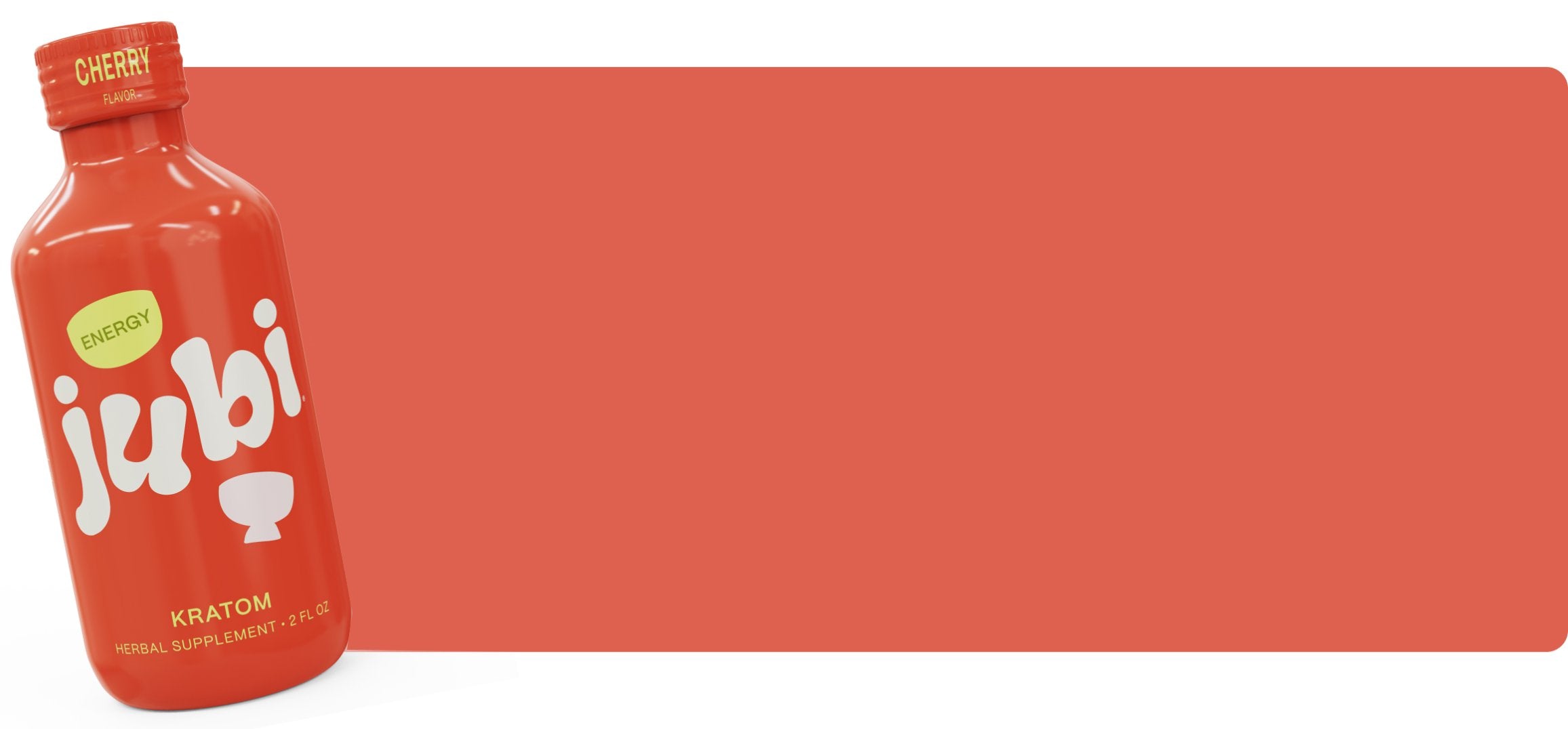
The Jubi Cherry Energy Shot ($9.99) provides 25mg mitragynine per serving from White Vein Kratom - positioned at the energizing end of the dose-response curve where adrenergic and serotonergic effects predominate. The feeling: clean alertness, elevated motivation, mood support that makes the day's demands feel more tractable rather than simply more urgent.*
The Jubi Lime Focus Shot ($14.99) provides 60mg mitragynine per serving - a higher dose that produces more pronounced cognitive focus and a more sustained engagement with demanding tasks. The feeling at this dose is more specifically cognitive - the kind of mental clarity that makes complex problems feel more solvable.*
Kava and the relaxation-presence connection:
Kavalactones' interaction with GABA receptors, serotonin pathways, and other calming systems produces a relaxation that most users describe as qualitatively different from the relaxation produced by either alcohol or pharmaceutical anxiolytics.
The feeling: physical tension releases progressively rather than suddenly. Mental noise - the background processing of unresolved tasks and tomorrow's concerns - quiets to a level that allows genuine presence in the current moment. Social interaction feels less effortful. The specific quality of ease that stress-heavy days make elusive arrives in a way that feels earned rather than chemically induced.*
This distinction - feeling genuinely at ease rather than chemically sedated - is consistently cited by people who switch from alcohol to kava as the characteristic that makes kava feel like a genuine alternative rather than a compromise.*
The Hydration-Feeling Connection Most People Underestimate
In a guide about the connection between beverages and how you feel, water deserves more attention than it typically receives - because the beverage-to-feeling connection that affects the largest number of people most consistently is not caffeine or alcohol or botanicals. It is dehydration.
The research is unambiguous: even mild dehydration - 1-2% of body weight - produces measurable impairments in cognitive performance, mood, and energy that most people misattribute to other causes.
What mild dehydration actually feels like:
The brain fog that arrives mid-morning without obvious cause. The fatigue that doesn't correlate with sleep quality. The headache that aspirin doesn't fully resolve. The irritability that seems disproportionate to its triggers. The difficulty concentrating that feels like distraction but doesn't respond to typical focus interventions.
All of these are consistent with mild dehydration - and all of them are consistently reported in research studies on mild dehydration-induced cognitive impairment. They're also all consistently misattributed: to stress, to insufficient sleep, to the difficulty of the work, to personality, to health conditions. The actual cause - inadequate fluid intake - is rarely considered because thirst is a lagging indicator that doesn't reliably signal deficit until dehydration is already affecting performance.
The compound connection:
Mild dehydration also impairs the absorption and efficacy of the beneficial compounds in functional beverages. Botanical compounds dissolved in liquid are absorbed into a system that requires adequate fluid for all its biochemical processes - and even mild dehydration at the cellular level impairs the enzymatic and transport processes that move active compounds from the digestive system into circulation.
This means that the morning kava or kratom shot, the midday matcha, the adaptogen latte - all of them work better when adequate hydration is the foundation they're working within. The functional beverage routine that doesn't include consistent hydration is leaving significant effectiveness on the table.
Practical implementation:
20oz of water with electrolytes before anything else in the morning. A large water vessel visible on the workspace throughout the day. The behavioral association of drinking water with task completion or hourly transitions. These simple structural decisions address the most universal and most underestimated beverage-to-feeling connection most people have.
Nootropic Beverages: The Cognitive Feeling Connection
The connection between specific nootropic compounds in beverages and cognitive performance is one of the most practically relevant beverage-to-feeling connections for people in demanding professional, academic, or creative work.
Lion's Mane and the clarity feeling:
The feeling that consistent daily Lion's Mane consumption produces is difficult to describe acutely because its primary mechanism is progressive rather than immediate. Over two to four weeks of daily use, Lion's Mane's NGF-stimulating effects produce a gradual improvement in cognitive baseline - thinking feels less effortful, focus sustains more readily, information processes more efficiently, and mental fatigue arrives later in extended work sessions.
The characteristic description from people who've been consistent with Lion's Mane for four to six weeks: "I feel like I'm just thinking better, but I can't point to a specific moment when it changed." This is what genuine neuroplasticity-mediated cognitive improvement feels like - not an acute effect but a progressive elevation of baseline that becomes apparent in comparison rather than in the moment.*
The immediate feeling from the Lion's Mane Shot comes from the caffeine-L-Theanine combination - calm, focused alertness within thirty to sixty minutes. The progressive feeling builds over weeks from the Lion's Mane, Bacopa, and Cognizin that are doing their slower work on the underlying cognitive infrastructure.*
Ginkgo and the circulation feeling:
Ginkgo Biloba's primary mechanism - supporting cerebral blood flow - produces a feeling that's more often noticed in its absence than its presence. When cerebral circulation is adequate, thinking proceeds normally. When it's impaired - as it is during long periods of sedentary work, during dehydration, or in people with reduced vascular health - thinking is slower and more effortful in ways that feel like general cognitive decline but are partly circulatory.
Ginkgo supplementation in the Lion's Mane Shot addresses this specifically - not by producing an acute feeling change, but by supporting the delivery of oxygen and glucose to neurons that cognitive performance depends on. The feeling is the absence of the vascular impairment - sharper, clearer thinking maintained through longer work sessions.*
Bacopa and the memory-learning feeling:
Bacopa's effects on the hippocampal signaling efficiency that underlies memory formation and retrieval produce a feeling that people with significant learning demands notice most clearly: information seems to stick better, recall is faster and more reliable, and the specific fatigue of intensive study or learning-heavy work arrives later.
For students, people in rapidly evolving fields, and anyone whose daily work involves substantial information acquisition and application, Bacopa's cumulative effects on learning efficiency are among the most practically significant cognitive feeling changes available through any beverage.*
The Gut-Brain Connection: How Your Digestive System Affects Your Mood
The rapidly developing field of gut-brain axis research has significantly expanded understanding of how beverages affect mood through mechanisms that don't involve direct blood-brain-barrier crossing of active compounds.
The enteric nervous system - often called the "second brain" - contains approximately 100 million neurons lining the gastrointestinal tract and maintains bidirectional communication with the brain through the vagus nerve. This system both receives signals from the brain (which is why stress produces gastrointestinal symptoms) and sends signals to the brain (which is why gut microbiome health influences mood, anxiety, and cognitive function).
How beverages affect this system:
High-sugar beverages disrupt the gut microbiome toward profiles associated with increased systemic inflammation and, through the gut-brain axis, with increased anxiety and depressive symptoms. This connection is increasingly supported by epidemiological research linking sugar-sweetened beverage consumption to mental health outcomes.
Probiotic beverages - kombucha, kefir, certain functional drinks - may support gut microbiome diversity in ways that have downstream mood and cognitive implications through the gut-brain axis. The research in this area is active and developing, with growing evidence for microbiome-mediated effects on anxiety, mood, and cognitive performance.
Botanical compounds including kavalactones and kratom alkaloids interact with gut receptors as well as central nervous system receptors - the enteric opioid receptors that kratom alkaloids interact with are part of the gut-brain communication system that influences both digestive function and mood.
The practical implication: what you drink affects how you feel partly through mechanisms that don't involve the active compounds crossing into your brain directly - they involve the gut's own neural and hormonal signaling systems, which are themselves powerful determinants of mood and cognitive function.
Building the Beverage-Feeling Connection Into Your Daily Practice
Understanding the connections is one thing. Translating that understanding into a daily practice that reliably produces the feelings you want - rather than accidentally creating the feelings you don't want - is the application.
Morning: Set the Cognitive and Energy Tone
20oz water with electrolytes before anything else - addressing the overnight dehydration that impairs the morning's cognitive baseline before any other beverage has a chance to support it.
Lion's Mane Clarity + Energy Shot ninety minutes after waking - providing the caffeine-L-Theanine calm alertness immediately alongside the progressive cognitive enhancement building from daily Lion's Mane, Bacopa, and Cognizin use.*
The feelings these choices support: clear-headed morning alertness without anxiety, stable blood glucose (from no added sugar in the morning botanical shot), and the beginning of the day's contribution to progressive cognitive enhancement.
Midday: Sustain the Energy-Focus State
Kratom Stick Pack mixed into 16oz of cold water - the energy and mood support that carries through the early afternoon circadian dip. The feeling: directional energy rather than scattered stimulation, elevated motivation that makes the afternoon's demands feel accessible rather than burdensome.*
The feeling these choices prevent: the blood sugar crash from high-sugar lunch beverages, the caffeine anxiety from excessive afternoon caffeine, and the circadian dip's full cognitive performance impact.
Afternoon: Maintain Without Disrupting Tomorrow
Peppermint tea for caffeine-free alertness support - the menthol-mediated TRPM8 receptor activation produces genuine alertness enhancement without the sleep-disrupting adenosine receptor blockade of caffeine. Consistent hydration. No caffeine after 2pm to protect sleep quality.
The feelings these choices support: maintained afternoon alertness without the cortisol elevation and sleep disruption of afternoon caffeine.
Evening: Transition and Recover
Jubi Piña Colada Relax Shot or Kava Stick Pack - kavalactone-mediated GABA receptor activation producing physical tension release, mental quieting, and the mood warmth that genuine recovery should feel like.*
The feelings these choices support: genuine transition from activation to rest, the specific ease of being present in the evening rather than carrying the day's demands forward, the social warmth that makes evening relationships genuinely restorative.
Pre-Sleep: Support Tomorrow's Foundation
Kava Stick Pack or Strawberry Chill Kava Shot thirty to sixty minutes before bed - supporting sleep onset and sleep quality without alcohol's architecture-disrupting consequences.*
The feelings these choices support: easier sleep onset, more restorative sleep quality, and the next morning's energy that adequate sleep quality makes possible.
The Cumulative Effect: How Your Beverage Choices Shape Your Baseline Feeling
The single most important insight from the beverage-feeling connection is cumulative rather than acute.
Individual beverage choices produce individual feelings - this is the acute connection discussed throughout this guide. But the pattern of beverage choices across days, weeks, and months produces something more fundamental: a shift in your baseline feeling - the default state of energy, mood, and cognitive clarity that you experience between the specific effects of individual drinks.
People who consistently drink well - consistent hydration, botanical energy and focus support at appropriate times, kava or other botanical relaxation in the evening, absence of the blood sugar disruption and sleep architecture impairment of high-sugar and alcohol beverages - gradually develop a higher baseline. They feel better on ordinary days than they felt during their previous best days. Their cognitive default is clearer. Their emotional regulation is more robust. Their energy requires less stimulant support to maintain.
This baseline shift is what the most meaningful long-term benefit of a thoughtful beverage practice looks like - not the acute effects of any individual drink, but the cumulative elevation of what it feels like to simply be in your own body on an average day.
It builds slowly, which is why most people don't notice it happening. But the person who has spent three months building a consistent daily beverage practice - morning hydration, botanical cognitive support, botanical evening relaxation, protection of sleep quality - and then looks back at how they felt before has a clear point of comparison. The before-and-after is the most compelling argument for taking the beverage-feeling connection seriously.
Frequently Asked Questions
How quickly can I expect to feel a difference from changing my beverage habits? Immediate effects from hydration (same day), caffeine timing changes (three to five days of improved sleep quality), kava for evening relaxation (first use). Progressive effects from Lion's Mane and Bacopa (two to four weeks of consistent daily use). Full baseline shift from a comprehensive beverage practice (four to eight weeks).
What's the single most impactful beverage change most people could make? For most people, the highest-impact single change is either drinking 20oz of water before anything else every morning (addressing chronic dehydration) or stopping caffeine after 2pm (protecting sleep quality). Both produce significant, quickly noticeable improvements in daily feeling without requiring any new products or complex protocols.
Is the kava relaxation feeling similar to alcohol relaxation? They share the GABA receptor mechanism - both produce genuine anxiety reduction and physical ease. They differ in what follows: kava doesn't produce GABA rebound, doesn't disrupt sleep architecture, doesn't produce next-morning cortisol elevation, and doesn't carry alcohol's depressant progression at higher doses. The immediate relaxation feeling has similarities; the downstream feelings diverge substantially.
Can I build a complete mood-supporting beverage practice for daily use? Yes - the protocol outlined in this guide represents a comprehensive daily beverage practice. The most important thing is consistency across multiple weeks rather than perfection in any single day.
Are Jubi products appropriate for daily use? Jubi products are designed for regular use within recommended serving sizes. Kratom products should be used responsibly with appropriate breaks to manage tolerance. Kava is generally well-tolerated for daily use at recommended doses. Consult a healthcare provider if you have specific health concerns or take medications.
These statements have not been evaluated by the Food and Drug Administration. These products are not intended to diagnose, treat, cure, or prevent any disease. Not for sale to persons under the age of 18 or the legal age for kratom use in your state. Consult a healthcare provider before use if you are pregnant, nursing, have a serious medical condition, or take prescription medications. Do not combine kava or kratom with alcohol. Some products may be habit forming or lead to addiction. For the full warning statement, visit DrinkJubi.com.
Jubi does not ship to: Alabama, Arkansas, Indiana, Rhode Island, Vermont, Wisconsin, Sarasota County (FL), Union County (MS), Denver (CO), or San Diego (CA). Please verify local regulations before purchasing.