
If you are shopping for plant-powered focus or unwind drinks, one practical question comes up a lot: does kratom show up on a drug test? The short, honest answer is usually no for everyday workplace screens - and yes when a lab specifically orders a mitragynine assay.
Standard employment panels and specialized kratom tests are not the same thing. Policies also differ by employer, military branch, probation office, sports league, or clinical program. This guide covers what typical panels look for, when a kratom drug test is ordered, why product quality still matters, and how to shop with clearer expectations - without promising a pass or fail.
Educational buyer information only - not medical or legal advice. Always confirm requirements with your employer, program, or a qualified professional.
Quick answer: standard panels vs specialized assays
Most routine workplace urine screens - the familiar 5-, 7-, 9-, 10-, and 12-panel formats - target common categories such as cannabinoids, cocaine, amphetamines, certain opioids, and PCP. They are not designed as a mitragynine drug test.
Kratom's main alkaloids of interest are mitragynine and 7-hydroxymitragynine (often shortened to 7-OH). Those compounds are chemically distinct from the opioids that standard immunoassay panels target. In everyday practice, a typical kratom employment drug screen will not list mitragynine unless someone specifically adds it.
Specialized testing does exist. Large reference labs offer dedicated urine panels that screen for mitragynine and confirm positives with methods such as LC-MS/MS. Those assays must be ordered on purpose. They are not quietly bundled into a normal 10-panel just because a consent form says "drug test."
So when someone asks, does kratom show up on a 10 panel, the practical reply is: not on a standard commercial 10-panel that only lists the usual categories - unless that panel was customized, or a separate kratom assay was requested.
What a standard workplace drug screen usually includes
Federal workplace testing guidance is a useful reference for what "standard" looks like, even in private-sector jobs. SAMHSA's workplace drug-testing resources describe authorized federal panels centered on amphetamines, cocaine, marijuana, specific opioids, and PCP, plus specimen-validity checks. Those published panels do not treat mitragynine as a default analyte.
DOT-style five-panel testing follows a similar logic: a fixed set of categories under federal rules, not an open-ended botanical scan. Private employers can customize menus, so read the actual panel description rather than assuming every "10-panel" is identical.
Three takeaways:
- Panel name is not a guarantee of contents. A "10-panel" means about ten categories were packaged - not that kratom is one of them.
- Immunoassay screens look for specific targets. If mitragynine is not on the list, the screen is not looking for it.
- Confirmation chemistry matters. When labs chase kratom, they typically pair immunoassay screening with mass-spectrometry confirmation so the compound is identified specifically.
For plant background and product-variability context, see the National Institute on Drug Abuse (NIDA) kratom page. The FDA's kratom consumer focus page covers agency positions and product-safety concerns at a high level.
When can a specialized mitragynine drug test detect kratom?
Specialized assays change the picture. Public lab menus list dedicated options such as Labcorp's Kratom (Mitragynine), Screen and Confirmation, Urine panel. That style of test looks for mitragynine, often with confirmatory quantification and qualitative reporting for related alkaloids such as 7-OH.
Who might order a specialized panel?
- Clinical or treatment programs with expanded substance menus
- Probation, parole, or court-ordered monitoring with customized lists
- Some military, safety-sensitive, or athletic programs with stricter botanical rules
- Employers that explicitly add kratom to company policy and the lab order
If your paperwork only says "standard urine drug screen" with no mention of kratom, mitragynine, or 7-OH, that usually means a conventional panel. If the consent form or handbook lists kratom by name, ask for the assay name in writing.
Detection windows are not one neat number. Detectability depends on dose, frequency, metabolism, specimen type, and assay cutoff. Exact hour-or-day clearance claims are not trustworthy science. For a known specialized test, talk with the ordering clinician or Medical Review Officer - not forum folklore.
Does kratom cause a false positive on opioid panels?
People also worry that a kratom shot will "look like" morphine or oxycodone on a routine screen. At typical consumer-use levels, mitragynine is structurally distinct from the morphine-class opioids that standard immunoassays target, and routine cross-reactivity is not how those panels are designed to work.
Unexpected results should still go through proper confirmation. Mass spectrometry identifies specific compounds. If something odd appears on an initial screen, request confirmatory testing rather than guessing. When a lab runs a kratom assay, a confirmed result is reported as mitragynine (or related alkaloids), not as "heroin" or "oxycodone."
None of this guarantees you will or will not pass any particular screen. Panel design, cutoffs, and program rules decide the outcome.
Policy reality: federal scheduling is not the same as your workplace rule
Kratom remains generally unscheduled at the federal level in the United States, but that does not mean every employer, league, or program allows it. Local and state rules also differ, and some cities or states restrict sales entirely.
Before you buy or travel with products, check:
- Your employee handbook and any substance policy addenda
- Union or credentialing rules for safety-sensitive roles
- Probation, treatment, or clinical program agreements
- Athletic organization banned-substance lists
- State and local shipping or possession rules where you live and where products ship
Drink Jubi currently does not ship to AL, AR, IN, RI, VT, WI, or to Sarasota (FL), Union (MS), Denver (CO), or San Diego (CA). Always verify the latest restriction list at checkout.
When in doubt, ask which analytes are on the order. "Is kratom allowed?" and "Is mitragynine on my panel?" are two different questions - get both answers in writing if your livelihood depends on it.
Why product quality still matters for drug-test conversations
Even when a standard panel does not target mitragynine, product quality is not optional. Adulterated or poorly manufactured botanical products have, in rare reported cases, contained unexpected substances. That is why transparent lab testing belongs on any serious buying checklist.
A useful habit: read the Certificate of Analysis (COA) for the lot you are considering. Look for the testing lab's identity, lot or batch matching, mitragynine amounts that align with the label, and screens for heavy metals and microbes. Our guide on how to read a kratom COA walks through that checklist in plain language.
Lab-tested, Made in USA formats make that review easier because serving amounts and batch documentation are part of the product story. It will not rewrite your employer's panel, but it helps you avoid mystery powders and unlabeled extracts.
Choosing clearer Jubi formats while you stay policy-aware
If your personal or workplace rules allow botanical functional drinks, clarity beats guesswork. Ready-to-drink shots list mitragynine class amounts on the label, which is simpler than scooping loose leaf by eye.
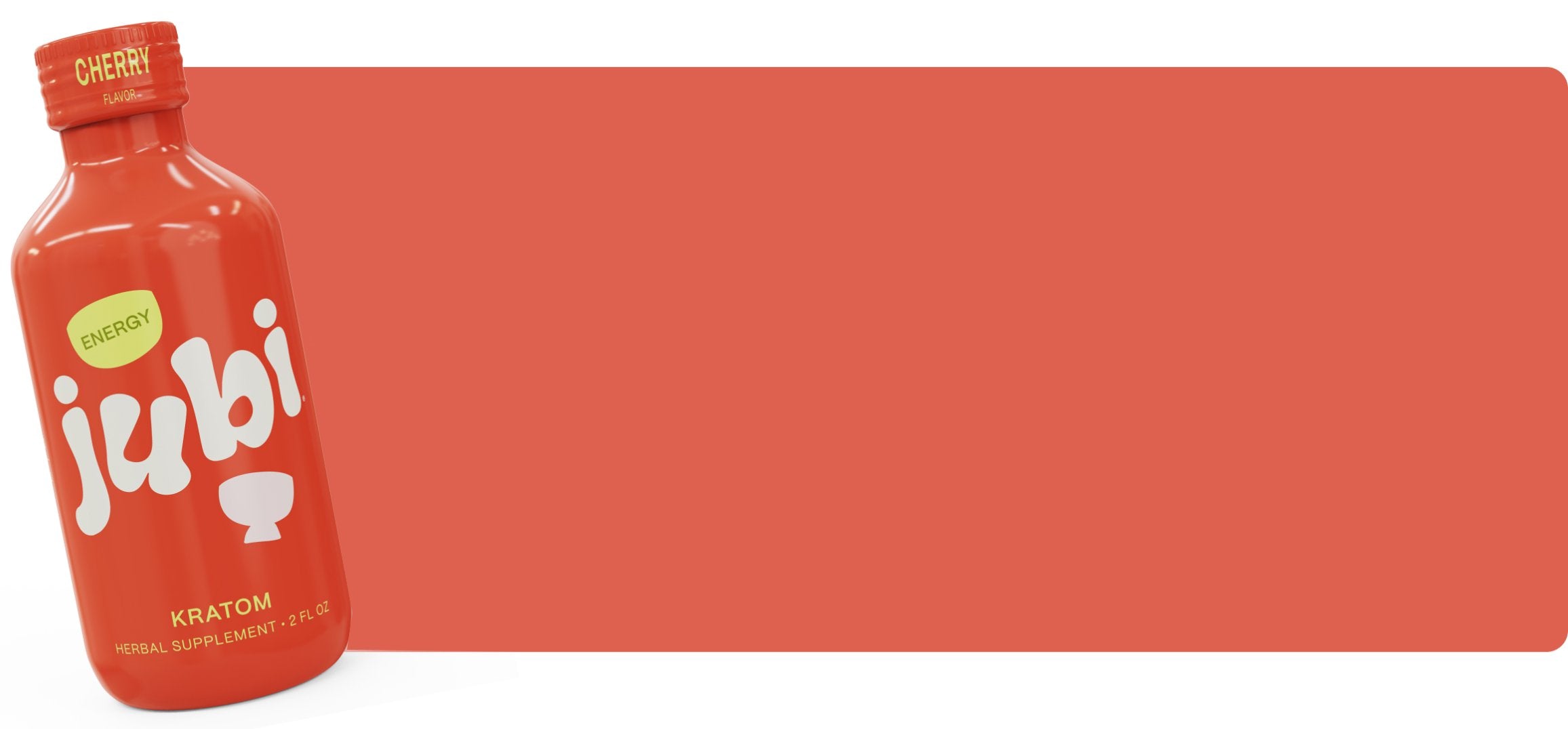
Browse the full shots collection for portable, flavored options. Many people start lighter with the Cherry Energy Shot (about 50 mg mitragynine class per bottle) and step up to the Lime Focus Shot (about 120 mg) for a stronger focus serving. Prefer mix-and-go? Kratom stick packs deliver a measured 120 mg stick you can mix into water.
Not sure which vibe fits yet? The Jubi trial pack lets you sample energy, focus, and relax styles without committing to a full case. Follow the label, start conservatively if you are new, and keep your own policy constraints in the foreground.
Practical checklist before your next screen
Use this short list when the question is employment- or program-related:
-
Ask which panel is ordered and whether mitragynine or 7-OH is listed by name
-
Save the written panel description from HR, the MRO, or the collection site
-
Do not treat anonymous internet timelines as scientific clearance windows
-
Prefer brands that publish lot-matched COAs and clear serving amounts
-
Separate "federally unscheduled" from "allowed by my program" - they are not synonyms
-
If you receive an unexpected result, request confirmatory testing and speak with the MRO
FAQ
Does kratom show up on a drug test in 2026?
On most standard workplace urine panels, no - because those panels typically do not include mitragynine or 7-hydroxymitragynine. On a specialized assay ordered for kratom alkaloids, yes, those compounds can be detected. Always verify the exact panel on your order.
Does kratom show up on a 10 panel?
A typical commercial 10-panel does not include a mitragynine drug test by default. Some employers customize panels, so read the analyte list rather than trusting the panel number alone. If kratom is not named, it is usually not being screened.
What is a mitragynine drug test?
It is a specialized laboratory assay - often immunoassay screening with LC-MS/MS confirmation - designed to detect mitragynine and sometimes related alkaloids such as 7-OH in urine. Reference labs publish these as separate orderable tests, not as automatic add-ons to every employment screen.
Can my employer still prohibit kratom even if it is not on the standard panel?
Yes. Workplace, military, sports, and clinical policies can restrict substances that are not part of a default federal panel. Unscheduled federally does not automatically mean permitted at work. Check your handbook and ask HR in writing.
Could a contaminated product cause an unrelated positive?
Low-quality or adulterated products are a separate risk from mitragynine detection itself. Unexpected ingredients are why COAs, lot matching, and reputable manufacturing matter. Choose lab-tested products and review the report before you buy.
How long does kratom stay detectable?
There is no single universal window for every person and every assay. Dose, frequency, metabolism, specimen type, and laboratory cutoffs all change the picture. Treat exact hour-or-day claims with skepticism, and ask the ordering clinician if you face a known specialized test.
Soft next step
If plant-powered shots fit your lifestyle and local rules, shop formats that put serving clarity and lab testing up front. Explore Drink Jubi, compare the shots collection, or start with the trial pack to find your preferred style - and keep your policy checklist alongside the flavor choice.
Disclaimer: Kratom products have not been evaluated by the FDA and are not intended to diagnose, treat, cure, or prevent any disease. For adults 21+ only. Follow label directions and consult a qualified professional with questions about personal use, health conditions, or medications. This article is not medical advice and is not legal advice about employment, probation, athletic, military, or other drug-testing policies. Testing rules and panels change - confirm requirements directly with the ordering organization or laboratory.