
The afternoon crash is not inevitable. Here's exactly why it happens, what's actually causing it, and how to get real, sustained energy that carries you through the entire day.
It happens to millions of people every single day with such regularity that most have accepted it as an unavoidable feature of adult life.
You make it through the morning - maybe not brilliantly, but adequately. The coffee kicks in, the work gets done, the meetings get attended. Then sometime between 1pm and 3pm, something changes. The energy that was there an hour ago is gone. The screen in front of you becomes harder to focus on. Simple tasks feel disproportionately difficult. Your mood drops. Your motivation evaporates. The thing you most want to do is close your eyes for twenty minutes.
This is the afternoon crash. And if you're reading this, you know it well.
Here's what most people don't know: the afternoon crash is not an inevitable consequence of being awake and working. It is a specific physiological event with specific causes - and when you understand what's actually happening in your body during the crash, the path to avoiding it becomes much clearer.
This guide covers exactly that. The real causes of the afternoon energy crash, why conventional solutions make it worse, and what actually works - the specific strategies, habits, and botanical tools that produce genuine sustained energy without the cliff edge drop that makes afternoons so difficult.
What Is Actually Happening During the Afternoon Crash
Most people assume the afternoon crash is simply tiredness - the body's way of saying it's been working hard and needs rest. This is partially true but misses the specific mechanisms that make the crash happen when it does and as abruptly as it does.
The adenosine accumulation factor:
Adenosine is a neurotransmitter that accumulates in the brain throughout the day as a byproduct of neural activity. The longer you've been awake and the more cognitively demanding your morning has been, the more adenosine has built up. Adenosine binds to adenosine receptors and progressively makes you feel tired - this is the body's natural sleep pressure mechanism.
By early afternoon, adenosine levels have been building for six to eight hours since you woke up. The tiredness signal becomes hard to ignore.
The caffeine crash factor:
Most people's response to morning tiredness is coffee - which works by blocking adenosine receptors. Caffeine doesn't reduce adenosine; it prevents you from feeling it. The adenosine keeps accumulating behind the blockade. When the caffeine eventually clears from your system (caffeine's half-life is five to six hours, meaning the 8am coffee is half cleared by 1-2pm), the adenosine receptors become available again and the accumulated adenosine hits all at once. This is why the afternoon crash for regular coffee drinkers is often abrupt and severe - they experience multiple hours of accumulated tiredness simultaneously rather than progressively.
The blood sugar factor:
The postprandial (post-meal) blood sugar response is a real contributor to afternoon energy dips that most people underestimate. A large lunch - particularly one high in refined carbohydrates - produces a significant insulin response that can overshoot and cause blood sugar to drop below baseline. This hypoglycemic dip directly impairs cognitive function, produces fatigue, and triggers cravings for quick sugar that start the cycle over again.
The circadian factor:
Human circadian biology includes a genuine, genetically programmed reduction in alertness in the early afternoon - typically between 1pm and 3pm. This is not a cultural artifact of lunch or work schedules; it appears in populations across different cultural contexts and time zones, and it's why many cultures around the world have traditionally incorporated a midday rest. The afternoon energy dip is partly baked into human biology.
Understanding these four distinct causes - adenosine accumulation, caffeine crash, blood sugar fluctuation, and circadian dip - is the foundation for understanding which interventions actually address the problem and which just temporarily paper over it.
Why Conventional Solutions Make Things Worse
Before getting into what works, it's worth understanding why the most common responses to the afternoon crash consistently fail or backfire.
More coffee in the afternoon:
This is the most common response and the one that most reliably creates a worse problem than the one it's solving. A 2pm coffee delays the crash but doesn't eliminate it - and the five to six hour half-life means that same coffee is still meaningfully active at 7-8pm when you're trying to wind down. Studies consistently show that afternoon caffeine consumption reduces total sleep time and worsens sleep quality even when users report feeling like they fall asleep normally. Poor sleep makes the next day's energy situation worse. Which leads to more coffee. Which leads to worse sleep. This cycle is self-reinforcing and genuinely difficult to break once established.
Sugary snacks:
The 2pm candy bar or cookie raises blood sugar quickly - producing a brief energy lift - and then drops it again thirty to sixty minutes later, often below where it started. This creates a secondary crash that's often worse than the original dip. The combination of insulin spike and rebound hypoglycemia is a reliable energy destroyer, not an energy solution.
Energy drinks:
Most conventional energy drinks deliver 150-300mg of synthetic caffeine alongside significant sugar loads. This is the worst of both worlds - the caffeine crash plus the blood sugar crash, arriving at the same time in the mid-to-late afternoon. Some users report an initial energy spike intense enough to feel genuinely useful, but the subsequent two-to-three-hour period of depleted energy and impaired mood is a significant net negative for daily productivity and wellbeing.
Pushing through without intervention:
For many people, the response to the afternoon crash is simply to endure it - accepting degraded cognitive performance for two to three hours as the cost of doing business. This is understandable but genuinely costly. Research on cognitive performance during periods of significant fatigue finds meaningful impairments in decision-making quality, attention accuracy, creativity, and emotional regulation - the specific functions that matter most in professional contexts.
The Foundations: What Prevents the Crash Before It Starts
The most effective approach to the afternoon crash is preventing it in the morning rather than treating it in the afternoon. These foundational practices reduce the severity of the circadian and adenosine dips significantly.
Morning hydration before anything else:
The body loses significant water during sleep through respiration and perspiration. Mild dehydration upon waking - which is extremely common - contributes meaningfully to morning brain fog and amplifies the afternoon energy dip. Drinking 16-24oz of water immediately upon waking rehydrates tissues, supports circulation, and addresses one of the most easily fixable contributors to the fatigue cycle.
Adding electrolytes - potassium, magnesium, and sodium - to morning water further supports cellular hydration and energy metabolism. Coconut water or a quality electrolyte supplement dissolved in water is more effective than water alone for people who are genuinely depleted.
Breakfast composition matters more than most people realize:
A breakfast high in refined carbohydrates - cereal, toast, pastries, fruit juice - creates a blood sugar spike followed by the insulin overshoot that produces mid-morning energy crashes, which then compound the afternoon dip. A breakfast built around protein and healthy fats with modest complex carbohydrates produces a much more stable blood sugar curve throughout the morning and into the afternoon.
Practical examples: eggs with vegetables, Greek yogurt with nuts and berries, a protein smoothie with good fat from nut butter or avocado. The goal is a breakfast that keeps blood sugar stable from 8am through noon - which dramatically reduces the amplitude of the early afternoon dip.
Lunch composition and portion size:
Large, high-carbohydrate lunches reliably produce the postprandial energy dip that amplifies the circadian dip into a full crash. Smaller lunches with higher protein and fat content, and lower refined carbohydrate content, produce more stable post-meal energy.
Practical approach: if a large lunch is socially or practically necessary, prioritize protein and vegetables first, eat refined carbohydrates last or minimize them, and consider a ten-minute walk immediately after eating - which blunts the blood sugar spike by activating muscle glucose uptake without requiring a major schedule disruption.
Strategic caffeine timing:
The sleep researcher Matthew Walker's work on caffeine timing offers one of the most useful evidence-based insights on this subject: delaying your first caffeine consumption until 90-120 minutes after waking allows the cortisol levels that naturally rise upon waking to do their work before caffeine is added. This produces a more gradual, sustained energy curve rather than an early spike followed by a steeper drop.
Additionally, cutting off caffeine by noon - rather than using afternoon coffee as a crash treatment - allows the caffeine to clear before bedtime and protects sleep quality, which is the single most important variable for next-day energy.
Botanical Tools for Sustained Energy: The Alternatives That Actually Work
With the foundational practices in place, botanical energy tools can be significantly more effective - because you're amplifying a stable baseline rather than compensating for a depleted one.
Kratom: The Clean Energy Botanical
For sustained daytime energy that genuinely doesn't produce a crash, White Vein Kratom deserves serious attention from anyone who has found conventional caffeine sources increasingly problematic.
The mechanism is the key difference. Kratom's primary energy-supporting alkaloid, mitragynine, interacts with adrenergic receptors and serotonin pathways to produce alertness, motivation, and mood elevation. It doesn't work by blocking adenosine - which means the adenosine doesn't accumulate behind an artificial blockade waiting to flood your receptors when the compound clears. When mitragynine's effects taper off, they do so gradually rather than abruptly, and the transition out of the energy window is a gentle reduction rather than a cliff.*
Users who switch from coffee to kratom-based energy products consistently describe the same set of experiences: the energy feels more directional (supportive of actual work rather than general agitation), the mood support is more pronounced, the jitteriness is absent, and the end of the energy window involves a gradual return to baseline rather than the abrupt drop that characterizes caffeine-based products.*
Jubi's kratom energy products for crash-free performance:
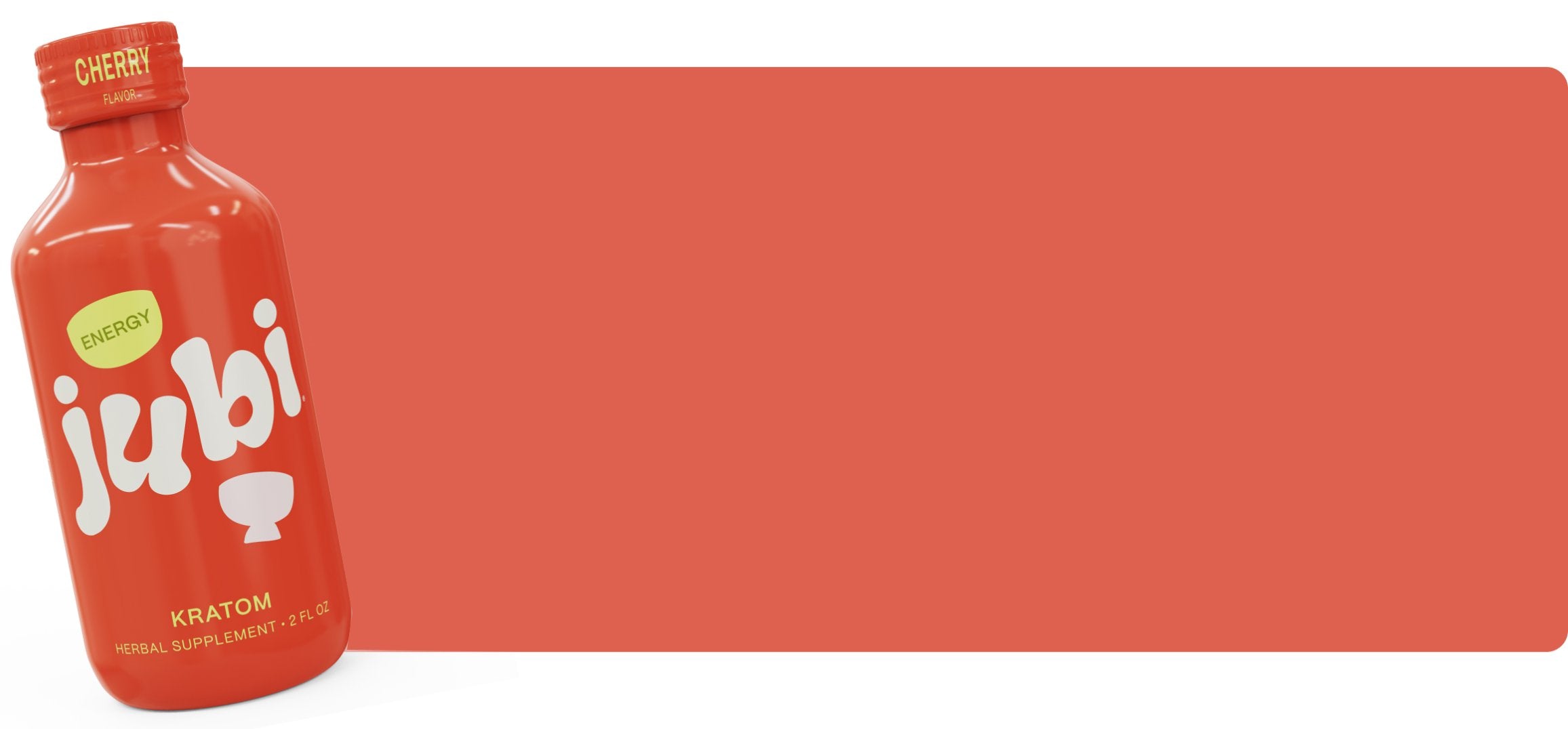
Cherry Energy Shot ($9.99) - 50mg mitragynine per 2oz bottle. Two 25mg servings of White Vein Kratom extract in a bold cherry flavor. The most accessible starting point for people exploring kratom as a crash-free energy tool. Take one serving in the morning and keep the second for the early afternoon window if needed.*
Lime Focus Shot ($14.99) - 120mg mitragynine per bottle. Two 60mg servings. Higher concentration for more pronounced cognitive focus. Specifically designed for the demanding cognitive work sessions where you can't afford to have your focus degrade. Cold-water extracted for a smooth, genuinely pleasant lime flavor with no bitter aftertaste.*
Kratom Stick Packs ($9.99) - 120mg mitragynine per stick in five flavors. The most flexible format - mix into 8oz of water for the standard concentration, or more water for a lighter, longer-lasting drink. The extended drinking format (sipping over twenty to thirty minutes rather than drinking a shot) produces a more gradual energy onset and a longer, smoother energy window.*
The timing advantage of stick packs: Mixing a Kratom Stick Pack at 11:30am and sipping it through the lunch period produces energy that's building as the circadian dip approaches at 1-2pm - essentially timing the energy support to arrive precisely when it's most needed.
Lion's Mane Mushroom + Natural Caffeine: The Cognitive Infrastructure Approach
The Jubi Lion's Mane Clarity + Energy Shot addresses the afternoon crash through a different mechanism than kratom - by optimizing the cognitive infrastructure that fatigue degrades.
Lion's Mane (Hericium erinaceus) stimulates NGF (Nerve Growth Factor) production - supporting the neuroplasticity and neuronal health that underlies all cognitive performance. Over two to four weeks of consistent daily use, Lion's Mane progressively raises the cognitive baseline - making the brain more resilient to the fatigue effects of demanding work, so the afternoon dip produces less impairment.*
Combined with 80mg of natural caffeine from green coffee beans and 200mg of L-Theanine in the same shot, the immediate effect is calm, focused alertness - the L-Theanine preventing the jitteriness and anxious overstimulation that plain caffeine produces while preserving and enhancing the focus-promoting effects.
The cumulative effect over weeks of daily morning use: a brain that is progressively better at sustaining cognitive performance through the afternoon, with less severe quality degradation during the circadian dip.
The dual-timeline approach: The Lion's Mane Shot provides immediate alertness (within thirty minutes from the caffeine-L-Theanine combination) and builds long-term cognitive resilience (over weeks from the Lion's Mane, Bacopa Monnieri, and Cognizin Citicoline). This dual timeline is what makes it uniquely effective for the afternoon crash specifically - you're not just treating the symptom, you're improving the underlying cognitive architecture that determines how severely the circadian dip affects you.*
Adaptogens: Reducing the Stress Drain
A significant contributor to the severity of the afternoon crash for many people is not the circadian dip itself but the cumulative stress drain that depletes energy reserves throughout the morning. Chronic stress keeps the body in physiological hyperactivation that consumes enormous energy without productive output - meaning that even a morning of normal cognitive work is more energetically costly for a stressed person than for a calm one.
Adaptogens address this energy drain at the source:
Rhodiola rosea reduces mental fatigue by supporting efficient neurotransmitter function and stress response modulation. Multiple controlled trials have found Rhodiola effective for reducing fatigue in demanding professional contexts - physicians working night shifts, students during exam periods, professionals in high-stress roles. The result is a longer effective window of cognitive performance before fatigue sets in.*
Ashwagandha reduces cortisol levels through its effects on the hypothalamic-pituitary-adrenal axis - lowering the stress hormone that, when chronically elevated, depletes energy reserves, impairs sleep, and amplifies the afternoon crash. Effects build over two to four weeks of daily use.*
Ginseng (particularly Panax ginseng) has been found in controlled trials to reduce fatigue and improve cognitive performance under stress - with effects that are particularly relevant to the mental endurance dimension of afternoon energy maintenance.*
These adaptogens work best as part of a consistent daily routine rather than as acute interventions. Starting adaptogen use before the problem becomes acute - building them into the morning routine during periods of sustained professional demand - produces better outcomes than reaching for them reactively after the crash has already arrived.
Kava for the Evening Recovery Dimension
The afternoon crash's severity is partly determined by how well you recovered from the previous day's demands. This is where kava enters the energy conversation in an indirect but genuinely important way.
Kava (Piper methysticum) produces genuine physical and mental relaxation through kavalactone-mediated GABA receptor interaction - without the sleep architecture disruption that alcohol produces. Users who incorporate kava into their evening routine consistently report better sleep quality, less morning grogginess, and - critically - more energy available the following day.*
The Jubi Strawberry Chill Kava Shot (500mg kavalactones, $9.99) and Jubi Kava Stick Packs (500mg per stick, five flavors, $8.99) provide kava in convenient, genuinely pleasant formats. Taking a Kava Shot thirty to sixty minutes before bed as a deliberate recovery ritual addresses the upstream cause of the afternoon crash - the insufficient recovery that makes each day start from a lower baseline than it should.
This is the part of the afternoon crash solution that most people overlook: you can't optimize daytime energy in isolation from nighttime recovery. Kava is the evening complement that makes the morning and afternoon energy tools work better by ensuring each day begins from a genuinely recovered baseline.*
Strategic Timing: When to Take What
Understanding what to take is only half the equation. When you take energy-supporting botanicals is equally important for avoiding the crash pattern.
The morning window (7-9am):
This is the optimal time for the Lion's Mane Clarity + Energy Shot - the natural caffeine and L-Theanine provide immediate morning alertness while the Lion's Mane begins its cumulative cognitive work. Alternatively, the Cherry Energy Shot for a kratom-based morning energy start that avoids caffeine's adenosine blockade mechanism entirely.
The pre-lunch window (11am-12pm):
This is the strategic window for preemptive afternoon crash prevention. A Kratom Stick Pack mixed at 11:30am and sipped over thirty minutes provides energy that peaks precisely as the circadian dip arrives - turning the dip from a crash into a manageable and barely noticeable reduction in energy level. This timing is one of the most consistently effective strategies for eliminating the afternoon crash experience.
The early afternoon window (1-2pm):
If the circadian dip is significant despite preemptive measures, a half serving of the Cherry Energy Shot or half a Kratom Stick Pack in the early afternoon provides targeted support. Note: this is a strategic half-serving, not a full re-dose. The goal is to smooth the dip, not to ramp back up to morning energy levels.
The late afternoon window (4-5pm):
This is where most people make the mistake of reaching for afternoon coffee. Instead: peppermint tea (which improves alertness without caffeine through menthol's TRPM8 receptor activation), a glass of water with electrolytes (addressing afternoon dehydration that amplifies fatigue), or a light protein-based snack that stabilizes blood sugar without the insulin spike of sugary options.
The evening recovery window (8-10pm):
Jubi Kava products - Strawberry Chill Kava Shot or a Kava Stick Pack - for genuine decompression and sleep quality support. This is the investment in tomorrow's afternoon energy.
Movement: The Underutilized Crash Buster
Physical movement is one of the most effective and most underutilized tools for managing the afternoon energy dip - and the research on this is remarkably consistent.
A ten-minute walk immediately following lunch blunts the postprandial blood sugar spike through muscle glucose uptake, reducing the insulin overshoot that contributes to the post-lunch energy crash. This ten-minute investment produces measurable improvements in afternoon cognitive performance in studies ranging from office workers to university students.
A five-minute movement break every sixty to ninety minutes throughout the afternoon maintains cerebral blood flow at levels that support cognitive performance - something that sustained sitting progressively impairs. The movement doesn't need to be vigorous: walking to a window, doing ten bodyweight squats, climbing a flight of stairs. The goal is circulation restoration, not exercise.
Even two minutes of physical movement during the peak of the afternoon dip produces short-term improvements in alertness through the endorphin and norepinephrine release that even brief exercise stimulates. This is not a long-term solution to the crash - it's a tactical intervention that provides fifteen to twenty minutes of improved alertness that can be enough to complete a critical task or get through a meeting.
Sleep: The Most Powerful Anti-Crash Tool Available
Nothing in this guide will work as well as it should if you're chronically sleep-deprived. This isn't a cliché - it's a pharmacological reality.
Sleep deprivation progressively impairs every mechanism that botanical energy tools work through. Adenosine clearance happens primarily during sleep - which is why partial sleep deprivation leaves people with elevated baseline adenosine and more severe afternoon dips. Cortisol regulation requires adequate sleep - sleep-deprived people have dysregulated cortisol curves that amplify every energy dip. Neurotransmitter synthesis and regulation require sleep - the mood and motivation that kratom, Lion's Mane, and adaptogens support are all downstream of neurotransmitter systems that sleep deprivation disrupts.
The most powerful intervention available for the afternoon crash is consistently getting seven to nine hours of quality sleep. Every other strategy in this guide is more effective when sleep is adequate and less effective when it isn't.
Practical sleep optimization:
Consistent sleep and wake times - even on weekends - are more important than most people realize for circadian energy regulation. Your body's energy curve throughout the day is anchored to your circadian rhythm, which is set primarily by sleep timing. Irregular sleep schedules desynchronize the circadian rhythm in ways that amplify the afternoon dip.
Avoiding caffeine after noon protects sleep quality in the ways discussed earlier. Evening kava use actively supports sleep quality. Cool, dark bedroom environments support the body temperature drop that initiates and maintains deep sleep. Screen exposure in the hour before bed delays melatonin onset and makes falling asleep harder - addressing this produces meaningful improvements in sleep quality for most people without any supplement intervention.
The Complete Afternoon Crash Prevention Protocol
Putting all of this together into a practical daily protocol:
Morning (7-9am):
- 16-24oz water with electrolytes immediately upon waking
- Wait 90 minutes before first caffeine
- Protein and healthy fat-forward breakfast
- Jubi Lion's Mane Clarity + Energy Shot or Cherry Energy Shot
Mid-morning (10-11am):
- Movement break every 60-90 minutes
- Water - maintain hydration throughout morning
- Rhodiola or ginseng if using adaptogens (take with morning meal)
Pre-lunch (11:30am):
- Jubi Kratom Stick Pack mixed in water and sipped over 30 minutes
- Strategic preemptive timing to meet the circadian dip with energy support arriving
Lunch (12-1pm):
- Smaller portion, higher protein and vegetables, lower refined carbohydrates
- Ten-minute walk immediately after eating
Early afternoon (1-3pm):
- Five-minute movement break at first sign of dip
- Water or coconut water - afternoon dehydration is real and significant
- Half serving of energy support if needed (not a full re-dose)
- Peppermint tea for caffeine-free alertness
Late afternoon (4-5pm):
- Protein-forward snack if energy is significantly depleted
- Water with electrolytes
- Final movement break of the day
Evening (8-10pm):
- Jubi Strawberry Chill Kava Shot or Kava Stick Pack for recovery and sleep support
- No caffeine after this point
- Consistent bedtime - prioritize seven to nine hours
Frequently Asked Questions
Why does the afternoon crash happen even on days when I don't drink coffee? The circadian dip is a genuine biological phenomenon that occurs regardless of caffeine consumption. What caffeine does is amplify the severity of the crash by masking accumulated adenosine that then hits all at once. People who don't drink coffee still experience a milder early afternoon energy dip - it's just less dramatic.
Is it bad to nap during the afternoon dip? A 10-20 minute nap during the early afternoon dip - a "power nap" - is supported by substantial research as genuinely effective for restoring alertness and cognitive performance without impairing nighttime sleep. The key is keeping it under 25 minutes to avoid entering deep slow-wave sleep, which produces sleep inertia rather than restored alertness. Many high-performing cultures and individuals use this deliberately.
Can kratom replace my morning coffee entirely? For many people, yes - and without the downstream afternoon crash that coffee reliably produces. The Cherry Energy Shot or a Kratom Stick Pack mixed into water in the morning provides directional energy and mood support through a mechanism that doesn't create the adenosine-masking crash cycle.
How long until the Lion's Mane Shot produces noticeable cognitive benefits? Immediate effects (alertness and calm focus from the caffeine-L-Theanine combination) are noticeable within thirty to sixty minutes from the first use. The cumulative cognitive baseline improvements from Lion's Mane and Bacopa Monnieri develop progressively over two to four weeks of consistent daily use.
Is the afternoon crash genetic? The severity of the circadian dip varies by chronotype - evening types (owls) tend to experience more severe afternoon crashes than morning types (larks). The fundamental mechanism is the same in all humans, but the amplitude varies. Genetics influence chronotype, meaning some people are genuinely more susceptible to the afternoon crash than others through mechanisms they didn't choose. This makes management strategies more important rather than less.
These statements have not been evaluated by the Food and Drug Administration. These products are not intended to diagnose, treat, cure, or prevent any disease. Not for sale to persons under the age of 18 or the legal age for kratom use in your state. Consult a healthcare provider before use if you are pregnant, nursing, have a serious medical condition, or take prescription medications. Some products may be habit forming or lead to addiction. For the full warning statement, visit DrinkJubi.com.
Jubi does not ship to: Alabama, Arkansas, Indiana, Rhode Island, Vermont, Wisconsin, Sarasota County (FL), Union County (MS), Denver (CO), or San Diego (CA). Please verify local regulations before purchasing.