
Why "closest" and "best" mean very different things in the kratom market - and the quality checklist that separates a product worth using from one that isn't.
If you've searched "kratom near me" recently, you already know what the results look like: a map pack of smoke shops, vape stores, gas stations, and the occasional herbal wellness store, organized by distance rather than quality. The closest option is almost never the best one - and in a category where quality differences translate directly into both efficacy and safety, that gap is worth understanding before you walk through any door or click any checkout button.
This guide covers what to actually look for when evaluating kratom - from any source - and explains why the format, testing standard, and sourcing transparency matter more than location or price.

Why the "Kratom Near Me" Search Produces the Wrong Results
The first thing to understand about local kratom retail is structural: in most cases, kratom is a secondary or tertiary product for the stores carrying it. When you search "kratom near me," the top results show smoke shops, vape stores, tobacco and glass shops, and sometimes gas stations that stock kratom alongside nicotine, glassware, or CBD. These businesses didn't build their operations around kratom quality - they added it as a SKU because demand existed.
The consequences are predictable. Local kratom retail operates almost entirely outside the quality standards that reputable online vendors follow - there are no shelf requirements, no testing mandates, and no COA display obligations. A gas station can stock kratom powder with zero lab results, zero sourcing transparency, and zero accountability - and most of them do exactly that. The inventory dynamic compounds this: kratom sitting on a shelf under fluorescent lights that degrade alkaloids over time, with alkaloid content often 30–50% lower than what's available from quality online vendors.
The practical result: users buy it, feel little or nothing, and sometimes incorrectly conclude that kratom doesn't work for them. It works - they just bought the wrong product.
There are exceptions. Some natural wellness shops or herbal stores carry kratom in a variety of forms - powders, capsules, extracts, drink mixes, or flavored options - where staff may be more knowledgeable and strain selection is better. And some regions have kratom bars or kava lounges serving kratom tea or drinks where the product is prepared fresh and the staff understands what they're serving. If a local option falls into this category and can produce lab documentation, it's worth evaluating seriously. But it requires asking the right questions - which is what the rest of this guide covers.
The Non-Negotiable: Third-Party Lab Testing With Published Results
This is the single most important quality signal in the entire category, and it's the first question to ask any vendor - local or online.
Transparent lab testing - Certificates of Analysis confirming purity and alkaloid content - is what separates reputable kratom from risky products. A Certificate of Analysis (COA) from an independent, third-party lab should confirm at minimum: mitragynine percentage, 7-hydroxymitragynine content, heavy metals screening (lead, mercury, arsenic, cadmium), and microbial contamination testing (E. coli, Salmonella, mold). Biological contamination is a real documented risk - Salmonella outbreaks linked to kratom have occurred in the past when leaves weren't handled, dried, or stored properly.
Reputable brands in 2026 use QR codes on every package that link directly to batch-specific lab results - not generic "representative" samples but the actual test results for the specific batch you're buying. If a local store can't produce a COA for the product on the shelf, the honest answer is that you don't know what's in it. If staff can't produce lab documentation when asked, the kratom is likely untested and risky.
This is the clearest practical advantage of buying directly from a transparent brand: most reputable online retailers provide detailed product information including mitragynine content, strain origins, and laboratory test results for quality assurance, and the COA is accessible before purchase rather than something you have to request in person and hope the staff can find.
GMP Certification: The Manufacturing Standard That Actually Matters
Beyond testing the finished product, the manufacturing environment matters. The American Kratom Association's GMP Standards Program sets out how kratom vendors should handle sanitation, record-keeping, product testing, and quality control - and AKA-GMP certification from a vendor is a meaningful signal that the supply chain has been audited, not just that a single batch passed a lab test. The best kratom brands of 2026 have shifted to a transparency-first model where every bag is linked to a specific lab result ensuring the purity and potency you expect.
Jubi's products are manufactured in GMP-compliant, FDA-registered US facilities - a manufacturing standard that covers the full production process rather than just the finished product. This matters specifically in the ready-to-drink beverage context, where cold-water extraction requires controlled processing conditions to preserve alkaloid integrity. A manufacturing environment built specifically for kratom beverages is meaningfully different from a warehouse that handles multiple product categories under variable conditions. The full manufacturing story is covered in Jubi Review: What Makes This Functional Beverage Different?
Why the Format Matters as Much as the Source
Even with a fully tested, GMP-manufactured product, the format determines how consistently you can control your dose - and dose consistency is the most important practical variable for both safety and efficacy.
Raw kratom powder from any source carries an inherent dosing challenge: each capsule typically contains 500–600mg of kratom powder, and beginners often prefer capsules for the convenience of precise dosing without the taste of powder. Even capsule-format kratom requires knowing the mitragynine percentage per gram to understand what dose you're actually taking per serving - information that's often absent from local retail packaging.
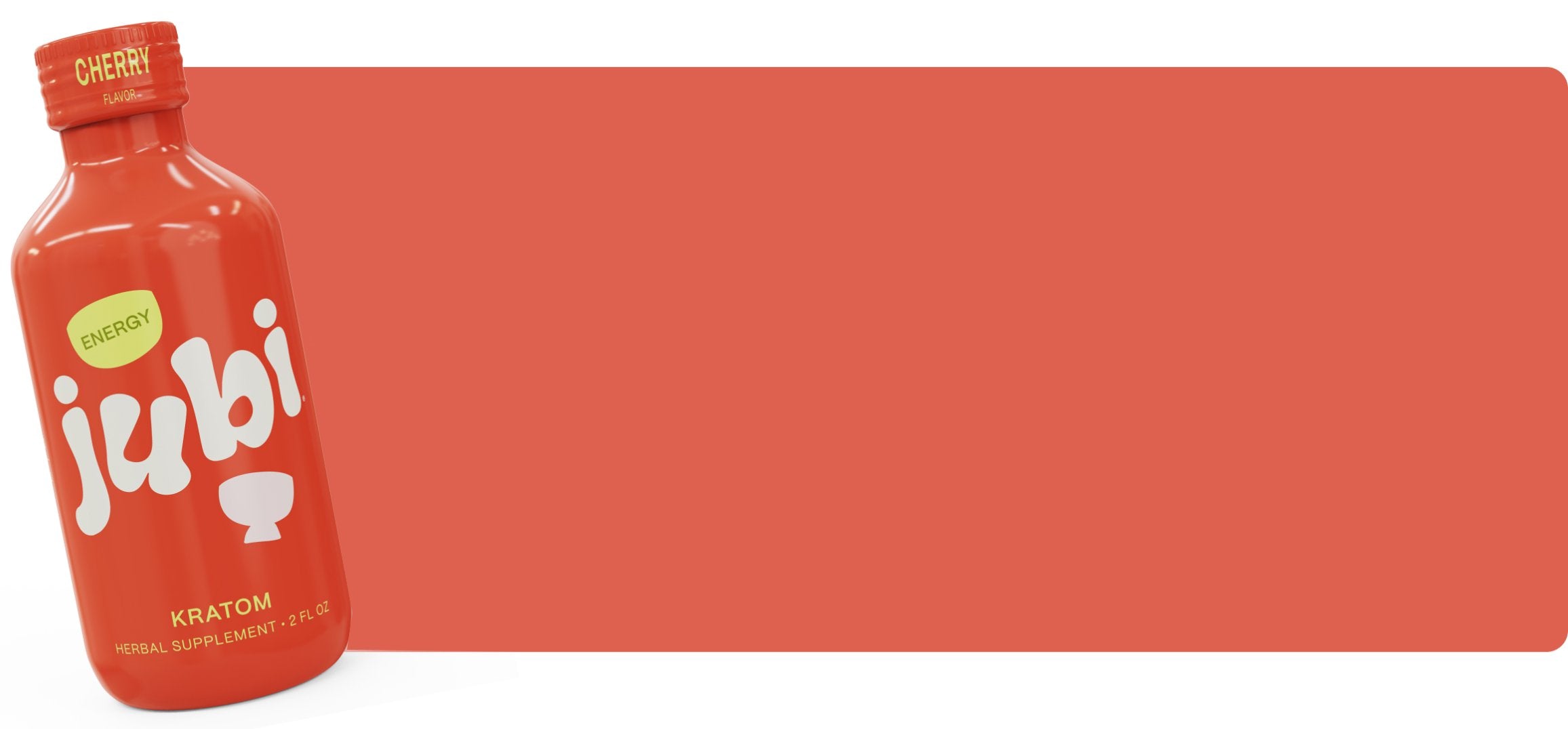
Ready-to-drink shots and stick packs solve this problem directly. Jubi's Cherry Energy Shot (50mg mitragynine), Lime Focus Shot (60–120mg), and Kratom Stick Packs (120mg) carry standardized mitragynine content per serving, tested by batch, with no conversion math required. This is the practical value of the beverage format that gets overlooked in conversations about local vs. online sourcing - it's not just a convenience play, it's a dosing accuracy advantage that matters particularly for people new to kratom who are trying to stay within the energy-and-focus dose range rather than accidentally crossing into sedation territory. The dose-response relationship is covered in depth in Why Professionals Are Exploring Kratom-Based Energy Drinks.
What to Look For on Any Label
Whether you're evaluating a local product or an online one, these are the specific things worth checking before purchasing:
Strain and vein color clearly stated. Red, green, and white vein kratom have meaningfully different effect profiles - white and some green varieties for energy and focus, red for relaxation and sedation. White Maeng Da is widely cited as the go-to choice for energy and focus - Maeng Da strains are specifically cultivated for high alkaloid content, and the white vein variety delivers a clean, focused experience. A label that says only "kratom extract" without identifying strain or vein color is telling you something important about the vendor's transparency.
Mitragynine content per serving. This is the primary active alkaloid for energy and focus effects and should appear as a specific milligram quantity per serving, not a percentage of proprietary blend or an unquantified "extract."
7-Hydroxymitragynine content disclosed. As covered in Why Professionals Are Exploring Kratom-Based Energy Drinks, 7-OH is a significantly more potent opioid receptor agonist than mitragynine and the compound specifically under regulatory scrutiny in 2026. Products with elevated 7-OH content carry a meaningfully different risk profile - and reputable vendors are transparent about this content so buyers can evaluate it directly.
Batch date and expiry. Kratom is a botanical and degrades over time, particularly under light and heat. The freshest harvests in 2026 are typically vacuum-sealed at the source to prevent oxidation and preserve alkaloid integrity. Undated inventory on a gas station shelf is a real quality risk, not a hypothetical one.
COA accessible by batch number or QR code. Not a generic lab result from a different batch, but documentation specific to the product you're holding.
The State of Kratom Legality in 2026
One genuinely useful output of the "kratom near me" search is legal verification - because legality varies significantly by state and locality, and the map results implicitly confirm that kratom can be sold at your location.
Kratom is legal at the federal level as of early 2026 - the DEA has not classified it as a controlled substance. However, state and local laws vary significantly. States with full statewide bans include Alabama, Arkansas, Indiana, Vermont, and Wisconsin. Louisiana banned kratom effective August 1, 2025, making it a Schedule I substance. Over 22 states and the District of Columbia now have some form of kratom regulation, typically including age restrictions (18+ or 21+), labeling requirements, and limits on 7-hydroxymitragynine concentrations.
Local bans also exist within otherwise-legal states: San Diego and Oceanside (California), Denver (Colorado), Washington D.C., Sarasota County (Florida), Suffolk County (New York), and Union County (Mississippi) all ban kratom at the local level. The American Kratom Association maintains a current state-by-state legal guide worth bookmarking if your location is in a regulatory grey area.
Jubi ships to all states and localities where kratom is legal. The full list of non-shipping locations is listed at the bottom of every product page and in the disclaimer below.
Where This Points: What "Good Kratom" Actually Looks Like in 2026
The answer to "kratom near me" in 2026 isn't geographic - it's a quality checklist. A product worth using has a COA accessible before or at the point of purchase, GMP-compliant manufacturing, standardized dosing per serving, clear strain and vein identification, and disclosed 7-OH content. Those standards exist in some local specialty stores, more reliably in direct-to-consumer online brands.
For anyone evaluating the ready-to-drink category specifically, Jubi's full product range - the Cherry Energy Shot, Lime Focus Shot, Kratom Stick Packs, and 7OH Extract Shots - addresses all five criteria, with third-party testing results accessible via the FAQ page and the full product lineup available to browse before purchasing. For anyone new to the category, the Kratom & Kava Trial Pack is the lowest-commitment way to try the format with all the quality standards in place.
Frequently Asked Questions
Is kratom from a smoke shop safe? It depends entirely on the specific store's sourcing and testing practices - which most smoke shops don't document or display. The absence of a COA should be treated as a red flag regardless of how professional the packaging looks.
Why does the closest kratom store usually have the worst quality? Gas stations and smoke shops carry kratom as a secondary product selected on price rather than quality, typically from distributors with no testing requirements. Inventory turns slowly and is often stored under conditions that degrade alkaloid content.
What's the difference between kratom powder and a ready-to-drink shot? Powder requires the buyer to calculate an appropriate dose from the mitragynine percentage per gram. Ready-to-drink shots provide a standardized mitragynine quantity per serving with no conversion required, making dose accuracy significantly more reliable - particularly important for new users.
How do I verify a COA is legitimate? The lab name on the COA should be an independently verifiable third-party testing facility, not an in-house lab. Batch numbers on the COA should match the batch number on the product packaging. Reputable brands link directly to COAs via QR code on the product.
Is ordering kratom online legal? In states and localities where kratom is legal, yes - online ordering and home delivery are legal for adults 18+. Always verify your specific state and local regulations before purchasing.
These statements have not been evaluated by the Food and Drug Administration. These products are not intended to diagnose, treat, cure, or prevent any disease. Not for sale to persons under the age of 18 or the legal age for kratom use in your state. Consult a healthcare provider before use if you are pregnant, nursing, have a serious medical condition, or take prescription medications. Do not combine kava or kratom with alcohol. Some products may be habit forming or lead to addiction. For the full warning statement, visit DrinkJubi.com.
Jubi does not ship to: Alabama, Arkansas, Indiana, Louisiana, Vermont, Wisconsin, Sarasota County (FL), Union County (MS), Suffolk County (NY), Denver (CO), San Diego (CA), Oceanside (CA), or Washington D.C. Please verify local regulations before purchasing.