
An honest look at what's driving consumer interest in 7-hydroxymitragynine tablets - and the significant regulatory, safety, and quality questions anyone considering this category needs to understand first.
The 7OH tablet market has grown quickly. Brands with names like 7Stax, 7Tabz, Press'd, PURE7, and dozens of others now occupy smoke shop shelves and online supplement stores, marketed as precision-dosed kratom tablets designed for convenience and potency. Consumer interest in this category is real and documented. So is the regulatory pushback - and the gap between how these products are marketed and what the current clinical and regulatory picture actually shows is wide enough that anyone considering them deserves a clear account of both sides before making a decision.
This guide covers why consumers are switching to 7OH tablets, what they're actually getting, and what the evidence says about whether the switch is worth it.
What's Driving the Switch: The Honest Consumer Motivations
Understanding why people are moving toward 7OH tablets requires taking the appeal seriously rather than dismissing it - because the underlying motivations are legitimate even where the product category has genuine problems.
Dose precision and convenience. The most consistent practical frustration with kratom powder is dosing inconsistency. Powder requires weighing, calculating mitragynine percentage per gram, and adjusting for batch-to-batch variation. A tablet with a stated milligram quantity per dose - whether 15mg, 30mg, or 50mg of 7-OH - appears to solve this directly. Retailers often describe them as precision-dosed kratom tablets designed for convenience and potency, and for users who have struggled with powder dosing, that framing is genuinely appealing.
Potency per dose. 7-OH binds to mu-opioid receptors with meaningfully higher affinity than mitragynine - which means a smaller physical quantity produces a more pronounced effect. For users who have built tolerance to standard mitragynine-based products, the apparent efficiency of 7OH tablets is a real pull: a single tablet rather than a larger quantity of powder or a larger-volume shot.
Format accessibility. A tablet is the most familiar supplement format in existence. It requires no preparation, no flavoring, no liquid, no timing around a beverage routine. For users coming from pharmaceutical or supplement backgrounds, a tablet feels like the natural product form for something being used for a specific functional purpose.
These motivations are real. The problem isn't the appeal - it's what the category's actual products deliver against that appeal, and what they cost in risk.
What 7OH Tablets Actually Are - and Why Concentration Changes the Risk Profile
The critical distinction that most tablet marketing obscures is the difference between naturally occurring 7-OH in whole-plant kratom and the concentrated or semi-synthetic 7-OH in tablets.
In natural kratom leaf, 7-OH exists in trace amounts - typically less than 2% of the total alkaloid content. In the raw leaf, it is part of a balanced alkaloid profile that may provide natural checks against excessive consumption. Tablet products are different in a fundamental way: they focus on a single alkaloid rather than the whole plant profile, often using extracted or concentrated versions that produce much higher per-dose quantities than any natural kratom preparation delivers.
That difference changes how the substance behaves in the body - and it changes the risk profile in proportion. Because of the potency difference, many clinicians consider 7-OH products to be a separate risk category from kratom leaf. People who take these tablets often report effects resembling both kratom and opioids, and in some cases, users report stronger withdrawal symptoms than typical kratom products, especially after repeated use.
The Hawaii Department of Health's public warning - issued in May 2026 - put the potency comparison plainly: 7-OH is estimated to be 10 times more potent than morphine. That figure refers specifically to concentrated 7-OH, not to the naturally occurring trace alkaloid in kratom leaf. It's the number regulators are working from when they describe concentrated 7-OH as an "emerging public health threat."
The Regulatory Reality: What Has Actually Happened Since July 2025
Anyone considering 7OH tablets in 2026 needs to understand the regulatory timeline clearly, because it's moved fast and the market hasn't fully reflected it.
On July 29, 2025, the FDA formally recommended that concentrated 7-OH products be classified as Schedule I under the Controlled Substances Act - the same scheduling category as heroin and LSD - citing high abuse potential and lack of approved medical use. Warning letters were issued to multiple companies. In December 2025, the FDA physically seized approximately 73,000 units of 7-OH products from three Missouri firms - liquid shots and tablets specifically - worth around $1 million.
Florida enacted an emergency ban on concentrated 7-OH. Ohio, Oklahoma, and other states enacted or proposed state-level restrictions specific to 7-OH, separate from general kratom regulation. Los Angeles County attributed additional fatal overdoses to synthetic kratom products in October 2025.
The FDA has also been explicit about what its actions do and don't target: the regulatory push is specifically directed at concentrated, often semi-synthetic 7-OH products - not at natural kratom leaf products containing naturally occurring levels of the alkaloid. That distinction matters practically, but it doesn't help a consumer trying to evaluate whether a specific tablet product falls on the right or wrong side of that line.
As of mid-2026, the DEA has not yet acted on the FDA's scheduling recommendation - legal analysts note that the rulemaking process takes time and requires public comment. But state-level restrictions are expanding, and FDA enforcement action continues regardless of formal scheduling status. The legal landscape for 7OH tablets specifically is the most rapidly changing area in the entire kratom category right now.
The Quality Problem That Makes the Appeal Misleading
The precision-dosing appeal of tablets runs directly into the quality-control reality of the current market. Two products labeled similarly may not produce the same effects or strength - because products can vary widely in potency, formulation, and labeling transparency. Unlike the Lion's Mane or caffeine-L-Theanine categories where ingredient standardization is routine, the 7OH tablet market in 2026 includes a wide range of brands, strengths, counts, and product styles with inconsistent verification standards.
The risk asymmetry here is meaningfully worse than for standard kratom powder. With standard kratom powder, a lower-quality product is usually just a disappointing one - the alkaloid concentration is low enough that errors in sourcing or processing tend to produce underwhelming results rather than dangerous ones. 7-OH is different. The concentration levels are higher, the dose window is narrower, and the margin for error in manufacturing is smaller. A product mislabeled at 20mg that actually contains 40mg is a problem in a way that a mislabeled kratom capsule usually isn't.
Roughly 15–25% of imported kratom products fail independent quality testing for heavy metals, microbial contamination, or misleading alkaloid claims in the broader category - and the 7OH tablet category, which has grown rapidly with less regulatory oversight than the broader kratom market, has not demonstrated better quality control rates.
What This Means for Experienced Kratom Users Specifically
The consumer switching to 7OH tablets is typically not a first-time kratom user - they're someone already familiar with kratom who is looking for something more potent, more precisely dosed, or more convenient. That experience doesn't provide meaningful protection against concentrated 7-OH's distinct risk profile, because the pharmacology is categorically different from what mitragynine-based experience prepares someone for.
People who take 7-OH tablets often report effects resembling opioids more than kratom - which is pharmacologically accurate given 7-OH's higher mu-opioid receptor affinity. Withdrawal symptoms reported after repeated 7-OH tablet use are in some documented cases more severe than typical kratom withdrawal. These are not hypothetical concerns - they're clinical observations from addiction treatment providers working with this specific product category.
The Responsible Alternative: Jubi's Ready-to-Drink 7OH Format
For experienced kratom users who understand these risks and are making an informed decision to try 7OH specifically, the format and manufacturing standard of the product they choose matters more in this category than in any other in the kratom market.
Jubi's 7OH Extract Shots and $5.95 Single Pack Trial address the format question differently from tablets: the ready-to-drink shot format uses Jubi's cold-water extraction process and GMP-compliant US manufacturing, with third-party lab testing and clearly disclosed 7-OH content per serving. The product is positioned explicitly for experienced kratom users - not as a first-time product, not with potency-first marketing language, and not in the smoke-shop impulse-purchase context where unlabeled or misleadingly labeled products are most common.
Customer Kells described it as "by far the best product I've tried in terms of flavor, potency, and quality of effect" - and that specific combination - flavor, potency, quality - is the meaningful differentiator from a tablet market where many products solve the potency problem without addressing the flavor or quality verification problems. The broader context for evaluating 7OH products is covered in 7OH Near Me: What to Check Before You Buy, and the full Jubi product range including standard mitragynine-based alternatives is at the full product lineup.
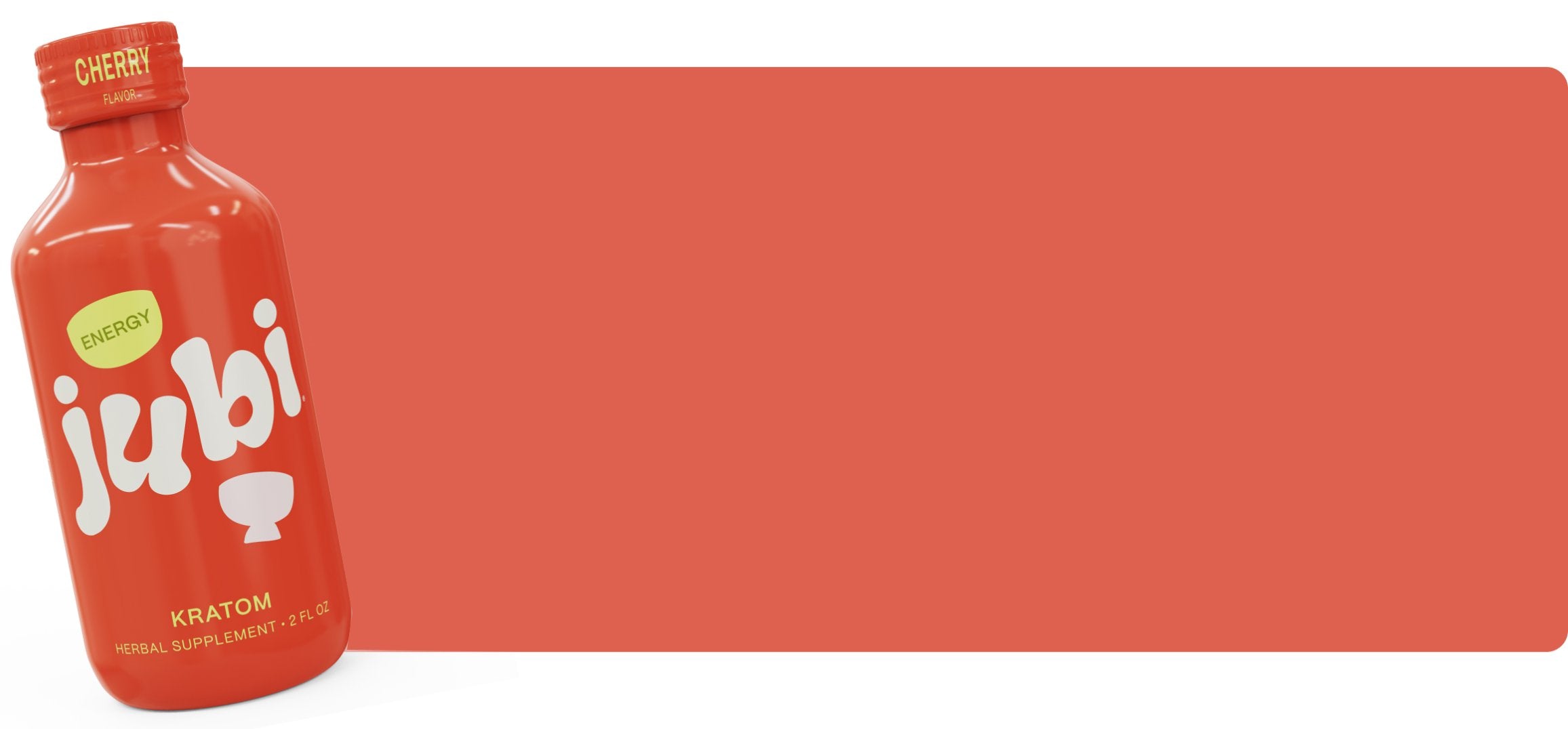
For anyone for whom the regulatory and risk picture above is reason to step back from concentrated 7-OH entirely - a reasonable response - the standard mitragynine-based Lime Focus Shot, Cherry Energy Shot, and Kratom Stick Packs operate via a different mechanism with a materially different regulatory and safety profile, and are not the target of current FDA enforcement action.
Frequently Asked Questions
Are 7OH tablets legal in 2026? At the federal level, the DEA has not yet finalized scheduling following the FDA's July 2025 recommendation, so concentrated 7-OH products are not yet federally scheduled. However, multiple states have enacted their own restrictions, the FDA is actively pursuing enforcement action, and the legal status is changing rapidly. Always verify your specific state and local regulations before purchasing.
Why are 7OH tablets more potent than regular kratom? Because they contain concentrated or isolated 7-hydroxymitragynine - a compound that binds to mu-opioid receptors with significantly higher affinity than mitragynine, kratom's dominant alkaloid. The concentration in tablets is typically far higher than the trace amounts occurring naturally in kratom leaf.
Is the precision-dosing advantage of tablets real? In principle, yes - a stated milligram quantity per tablet is more precise than powder dosing. In practice, the quality-control problems in the 7OH tablet category mean that label accuracy isn't guaranteed without batch-specific third-party testing, which most smoke-shop tablet brands don't provide.
What's the difference between Jubi's 7OH shot and a 7OH tablet? GMP-compliant US manufacturing, cold-water extraction, third-party lab testing with published results, clearly disclosed content per serving, and a ready-to-drink format that doesn't require powder handling or volume-calculation - alongside positioning specifically for experienced kratom users rather than general retail.
Should I try 7OH tablets if I'm new to kratom? No. Concentrated 7-OH is explicitly a product for experienced kratom users who understand the pharmacology and risk profile. First-time kratom users should start with standard mitragynine-based products at lower doses. See Energy, Focus, or Relaxation: Finding Your Perfect Match for the right starting points.
These statements have not been evaluated by the Food and Drug Administration. These products are not intended to diagnose, treat, cure, or prevent any disease. Not for sale to persons under the age of 18 or the legal age for kratom use in your state. Consult a healthcare provider before use if you are pregnant, nursing, have a serious medical condition, or take prescription medications. Do not combine kava or kratom with alcohol. Some products may be habit forming or lead to addiction. For the full warning statement, visit DrinkJubi.com.
Jubi does not ship to: Alabama, Arkansas, Indiana, Louisiana, Vermont, Wisconsin, Sarasota County (FL), Union County (MS), Suffolk County (NY), Denver (CO), San Diego (CA), Oceanside (CA), or Washington D.C. Please verify current local regulations before purchasing - the legal landscape for concentrated 7-OH products specifically is changing rapidly.