

There's a reason one cocktail became the universal symbol of unwinding. Here's the fascinating story behind the world's most relaxing flavor - and why it still works.

Close your eyes for a moment and think about the last time you truly relaxed.
Not the kind of relaxation where you're sitting still but your mind is still running through tomorrow's to-do list. Real relaxation - the kind where your shoulders actually drop, your jaw unclenches, and the mental noise that follows you everywhere goes quiet for a little while.
Now think about what you were drinking.
There's a decent chance it involved pineapple and coconut. Or at least, that you wish it had.
The piña colada has held its position as the unofficial beverage of genuine relaxation for over sixty years - across generations, across cultures, across the enormous shifts in what people drink and why. Other cocktails have come and gone. The piña colada stayed. And the reason it stayed isn't just because it tastes good. It's because it does something more sophisticated than that: it triggers a psychological and sensory state that primes your nervous system for rest before you've even finished the glass.
This is the story of why piña colada became the flavor of relaxation - and why understanding that phenomenon reveals something genuinely interesting about how flavor, memory, and the human need for rest are intertwined.
The Drink That Was Born to Make You Forget Your Problems

The piña colada was invented in Puerto Rico in the 1950s - depending on which origin story you believe, either by Ramón "Monchito" Marrero at the Caribe Hilton in 1954 or by Ramón Portas Mingot at the Barrachina restaurant a decade later. Both claimants were bartenders trying to create a drink that captured the essence of Puerto Rico in a glass.
What they created, whether intentionally or not, was something far more powerful than a cocktail. They created a sensory shortcut to a specific mental state.
The combination of fresh pineapple and coconut cream is not accidental. Pineapple's sweetness is bright, tropical, and energetically forward - it wakes up your palate, signals abundance, signals warmth. Coconut's richness is the opposite: slow, enveloping, almost maternal in its comfort. Together they create a flavor that is simultaneously exciting and soothing - a rare combination that neither ingredient achieves alone.
When the Puerto Rican government officially declared the piña colada the national drink of Puerto Rico in 1978, they were codifying something the island's bartenders had already known for decades: this drink belongs to the specific experience of being somewhere warm, unhurried, and free of obligation.
The Song That Made a Flavor Into a Feeling
In 1979, Rupert Holmes released "Escape (The Piña Colada Song)" - and the drink was never just a drink again.
The song is deceptively simple: a man bored with his relationship places a personal ad looking for someone who likes piña coladas and getting caught in the rain, only to discover that the respondent is his own partner. The twist is charming, the message is genuinely optimistic - you might have more in common with the person you love than the routine of daily life allows you to see - but what made the song a cultural phenomenon is something simpler than the story.
It's that opening line: "If you like piña coladas..."
Those five words became a cultural shorthand for a specific kind of longing - the desire to escape, to be somewhere warm and uncomplicated, to find romance and adventure beyond the walls of ordinary life. The piña colada in the song isn't really a cocktail. It's a symbol of possibility. Of the self that exists beyond the daily grind. Of the version of your life where you're sitting on a beach and the most pressing question is whether to order another round.
Once that association was set in the cultural consciousness, it became self-reinforcing. The piña colada already tasted tropical and warm. Now it also tasted like escape. Like romantic possibility. Like the life you're capable of living when the obligations fall away.
Flavor researchers call this phenomenon "conditioned taste preference" - the way specific tastes become linked to emotional states through repeated exposure and cultural reinforcement. You don't just taste pineapple and coconut. You taste a feeling. And the feeling the piña colada has been conditioning people to experience for six decades is: let go.
The Psychology of Tropical Flavor

There's genuine science behind why tropical flavors produce relaxation responses - and it goes deeper than nostalgia or cultural conditioning.
Sweet flavors trigger the release of dopamine in the brain's reward pathways. Not in the intense, addictive way that high-fructose corn syrup does - but in the gentle, satisfying way that signals "something good is happening." The pineapple's sweetness initiates this response the moment it hits your tongue.
Coconut adds a layer that most people don't consciously register but the nervous system absolutely notices: fat. The richness of coconut cream triggers satiety signals - the same neurological pathways that tell your body it's fed, it's safe, it can stand down from the state of hypervigilance that hunger and stress both produce. Rich, fatty foods have been associated with comfort and safety throughout human evolutionary history for exactly this reason.
Then there's the temperature. Most piña coladas are served cold or frozen - and cold temperature beverages activate a mild relaxation response through a mechanism involving the vagus nerve. The sensation of cold liquid moving through the throat and chest produces a subtle slowing of the nervous system's arousal response.
Add these elements together - dopamine trigger from sweetness, satiety signals from coconut richness, and vagal activation from cold temperature - and you have a beverage that is doing real physiological work before a single molecule of alcohol has reached your bloodstream.
This is why piña coladas are so frequently associated with the experience of actually relaxing, rather than just thinking about relaxing. The flavor itself is functionally active. It's not decoration. It's delivery.
Pineapple and Coconut: An Ancient Pairing With Modern Implications
Long before anyone thought to combine pineapple and coconut in a cocktail shaker, the cultures of the Pacific Islands and Caribbean had been pairing these two ingredients in cooking and ceremony for thousands of years.
In the Pacific Islands - Fiji, Tonga, Samoa, the Cook Islands - coconut is not just a food ingredient. It is embedded in cultural identity, ceremonial practice, and daily life in ways that Western cultures rarely achieve with any single ingredient. The coconut palm has been called the "tree of life" across multiple Pacific Island cultures because of its extraordinary versatility - food, water, oil, fiber, building material, and medicine all from a single plant.
Pineapple, native to South America but widely distributed across the Caribbean and Pacific through trade, carries similar cultural weight in many of the regions where it grows. In the pre-colonial Caribbean, pineapple was a symbol of welcome and hospitality - placed at the entrance to villages when visitors arrived to signal that they were safe, that they were guests rather than threats, that the community offered peace.
Welcome and peace. Hospitality and safety. These are the cultural associations baked into the raw ingredients of the piña colada at a level that predates the cocktail by millennia. When you drink one - or taste anything with that pineapple-coconut profile - you are tapping into something much older and more deeply encoded than a 1970s pop song.
Why the Piña Colada Works Without the Alcohol
Here's an observation that most discussions of the piña colada's cultural power miss: the relaxation response it triggers doesn't actually require alcohol.
Virgin piña coladas - pineapple juice, coconut cream, ice, no spirits - produce nearly identical sensory and psychological responses to the alcoholic version. Children who've never tasted alcohol react to the flavor with pleasure and calm. People who've given up drinking describe missing piña coladas specifically because the flavor itself did something for them that the alcohol was incidental to.
This is the key insight: the piña colada's power as a relaxation trigger is flavor-based, not alcohol-based. The alcohol in the classic cocktail amplifies and accelerates the relaxation response through its own mechanisms. But the foundation - the sensory and psychological priming for rest - is built entirely from pineapple and coconut.
Which raises an interesting question: if the relaxation-triggering properties of piña colada flavor are inherent to the flavor itself rather than dependent on alcohol, could they be deployed in a genuinely functional format - combined with botanical ingredients that also support relaxation through their own mechanisms?
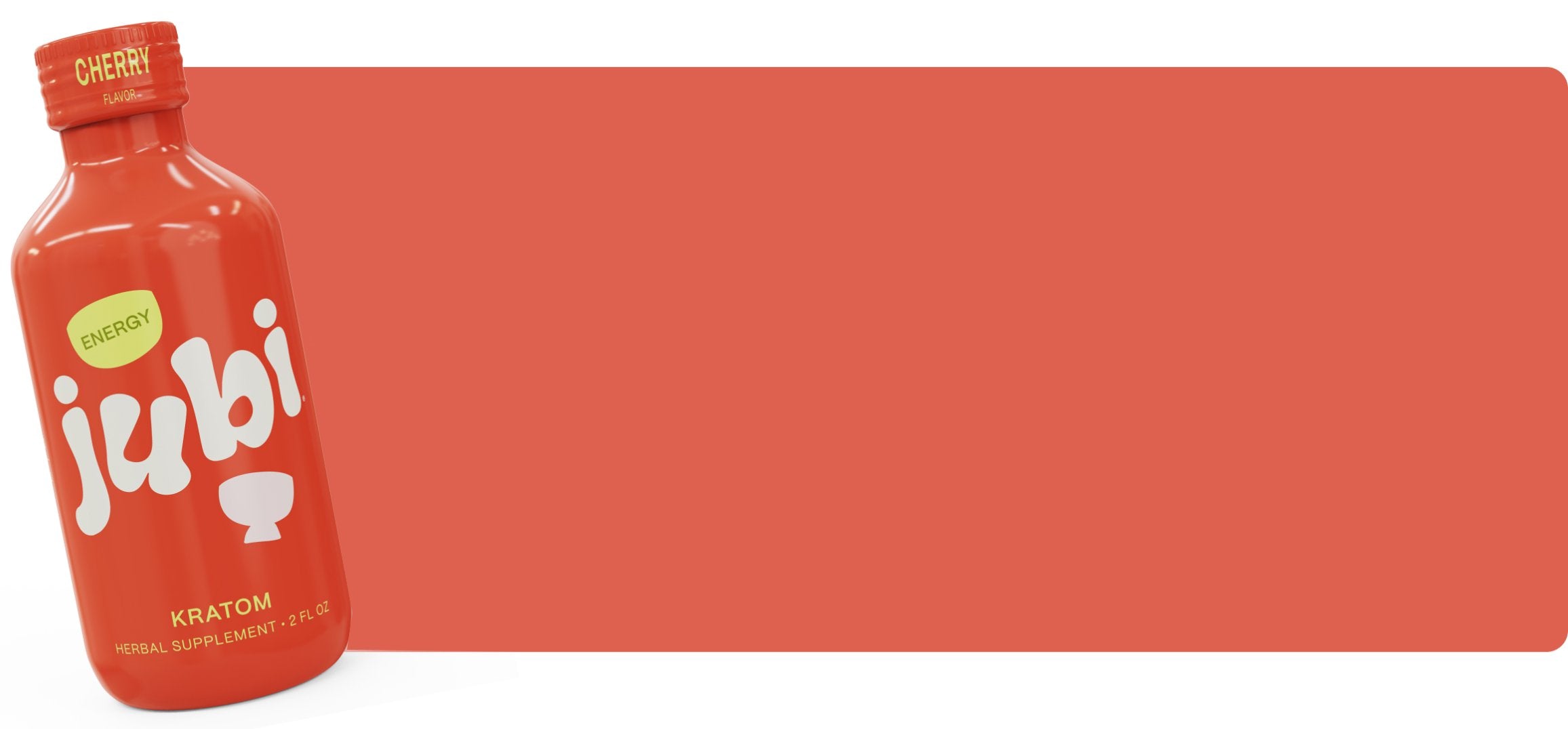
When Flavor Meets Function: The Jubi Piña Colada Relax Shot
This is exactly the thinking behind the Jubi Piña Colada Relax Shot - and it's the reason the product works the way it does.
The Jubi shot takes the piña colada's established, deep-seated associations with tropical escape and genuine relaxation and pairs the flavor with two botanicals that have been used for centuries across different cultures for exactly the same purpose: kava from the Pacific Islands and kratom from Southeast Asia.
The choice of piña colada as the flavor vehicle is not arbitrary. It is specifically right.
Kava itself comes from the Pacific Islands - the same cultural geography that gave the world the coconut-as-comfort, the hospitality of pineapple, and the ceremony of communal unwinding. When Jubi pairs kava extract with piña colada flavor, they're creating a sensory alignment between the botanical and its cultural origins. The flavor primes the relaxation response; the kavalactones deliver it.*
Kratom, from Southeast Asia, adds mood support and physical ease alongside the kava's deeper relaxation effects - contributing warmth and wellbeing to what the kava quiets.*
The result is a product where every layer of the experience works in the same direction. The pineapple-coconut flavor signals: time to let go. The kavalactones from kava deliver the physiological relaxation that signal promises. The kratom lifts the mood so that the relaxation feels good rather than simply heavy.
And crucially - there's no alcohol. So you can take it on a Tuesday evening before bed, or before a social event where you want to feel at ease rather than impaired, or as part of a daily wellness routine that doesn't involve the next-day consequences of drinking.
At $11.99 per 2oz bottle, with two servings per bottle and a box-of-12 option that saves up to 24%, the Jubi Piña Colada Relax Shot makes this complete relaxation experience accessible as a daily practice rather than an occasional indulgence.*
The Ritual Dimension: Why How You Drink Matters as Much as What You Drink
There's one more dimension of the piña colada's relaxation power that deserves attention: the ritual of it.
You don't crack open a piña colada in a hurry. The drink - whether cocktail or botanical shot - carries implicit instructions for how to consume it. Slowly. Intentionally. In a moment carved out from the demands of everything else.
Behavioral research on relaxation consistently finds that the ritual surrounding a relaxation practice is as important as the practice itself. The deliberate act of choosing to relax - of taking a physical step that signals to your nervous system that the high-alert phase is ending - produces measurable physiological changes that can't be achieved through passive distraction.
The piña colada flavor, with all its associations, is one of the most powerful ritual anchors available for this kind of intentional relaxation. Taking a Jubi Piña Colada Relax Shot in the same way - deliberately, at the same time each day, as a chosen transition moment - transforms what could be just a supplement into a genuine daily decompression practice.
That practice, over time, becomes something valuable: a reliable way to access genuine relaxation in a world that makes genuine relaxation increasingly difficult to find.
The Flavor That Taught the World to Unwind
The piña colada has lasted sixty years as the symbol of relaxation because it earns that position on multiple levels simultaneously - sensory, psychological, cultural, physiological, and ritual.
The pineapple wakes up your reward pathways. The coconut signals safety and satiety. The tropical associations bypass your analytical mind and speak directly to whatever part of you still believes, despite all evidence to the contrary, that the best version of your life involves a hammock and no email.
When Rupert Holmes asked "if you like piña coladas," he wasn't really asking about a cocktail preference. He was asking: do you believe you deserve to escape? Do you allow yourself to actually relax? Do you give that part of yourself - the part that needs rest and pleasure and warmth - what it needs?
The piña colada's enduring cultural power is the answer to those questions, offered in liquid form. And whether you take yours as a classic cocktail on a warm afternoon, a virgin version at a family gathering, or a Jubi Piña Colada Relax Shot as a deliberate daily ritual of recovery - the flavor is doing the same thing it's always done.
Telling you it's okay to let go.*
Ready to Experience the Most Relaxing Flavor in the World - Functionally?
The Jubi Piña Colada Relax Shot combines the world's most relaxation-associated flavor with premium kava and kratom extracts in a convenient 2oz shot format designed for daily use.*
👉 Shop the Jubi Piña Colada Relax Shot at https://drinkjubi.com/products/jubi-pina-colada-relax-shot-kava-kratom-relaxation-shot
$11.99 per bottle | Box of 12 saves up to 24% | Plant-based | Lab-tested | Made in the USA | Free shipping on orders $50+
*These statements have not been evaluated by the Food and Drug Administration. This product is not intended to diagnose, treat, cure, or prevent any disease. Not for sale to persons under the age of 18. Consult a healthcare provider before use. Do not combine with alcohol. This product may be habit forming or lead to addiction. For the full warning statement, visit DrinkJubi.com.



1 comment
pdb0wj