
What peer-reviewed research and large-scale user surveys actually show about how kratom affects productivity, focus, and motivation - alongside the genuine risks that responsible use requires understanding.
The productivity conversation around kratom has grown significantly in recent years, and not only in wellness forums. A 2024 ecological momentary assessment study published in JAMA Network Open - one of the most methodologically rigorous designs available for studying real-world substance use - found that among 357 kratom consumers tracked prospectively via smartphone over several months, most reported using kratom daily for productivity and mood improvement, and most reported improvements in daily living and productivity as outcomes. A separate latent-class analysis from Yale and Johns Hopkins published in 2025 found that productivity and energy were among the primary motivators distinguishing one of the four main subgroups of US kratom users.
That's peer-reviewed primary research, not marketing copy. It's also not the full picture - the same JAMA study found that more frequent use was associated with tolerance, withdrawal, and craving. Both findings deserve equal weight, and this guide gives them both.
What "Productivity" Actually Means in the Context of Kratom

The word productivity covers at least three distinct cognitive states that kratom affects through different mechanisms, and distinguishing them matters for understanding both the appeal and the limits.
Energy availability - having the physical and mental resources to begin and sustain work - is the most commonly reported kratom effect at low-to-moderate doses. This maps onto mitragynine's adrenergic receptor activity, which produces stimulation without the full cortisol-compounding spike of caffeine.
Directed focus - the ability to sustain attention on a specific task rather than experiencing generalized alertness that doesn't channel into output - is the effect most specifically associated with white vein kratom at energy-range doses. Unlike caffeine's scattered buzz, kratom focus tends to be directional - oriented toward the task at hand rather than diffused across environmental stimulation.
Motivation and task initiation - the willingness to begin difficult work, the reduction of the procrastination barrier that precedes demanding cognitive tasks - is the least well-studied but most consistently reported by productivity-oriented users. A 2026 ScienceDirect review of kratom's ethnopharmacology noted that user surveys and anecdotal reports describe kratom use for mood enhancement and motivation, while being appropriately candid that most evidence is based on self-reported outcomes and remains insufficiently validated through controlled clinical investigations.
These three effects - energy, focus, motivation - are related but not identical. Understanding which one you're actually seeking helps match the right product and dose to the actual need, which is the most important practical variable in using kratom productively.
The Research Base: What's Peer-Reviewed, What's Survey-Based, and Why the Distinction Matters
An honest evaluation of the productivity evidence requires separating the research by methodology, because they carry different epistemic weight.
The strongest evidence for kratom's productivity-relevant effects is mechanistic: mitragynine's adrenergic and serotonergic receptor activity is well-established pharmacology that predicts alertness and mood elevation at low-to-moderate doses. This is the same class of evidence that makes caffeine's mechanism credible - receptor-level pharmacology doesn't require large controlled trials to be real.
The most rigorous human evidence is the JAMA ecological momentary assessment study - prospective, longitudinal, smartphone-based real-time data collection from 357 users, which is methodologically superior to retrospective surveys because it captures proximal motivators and effects in the moment rather than relying on recall. The proximal motivators evaluated during the EMA involved situation-specific needs such as increasing energy and productivity, and most participants reported improvements in daily living and productivity as outcomes. The study also found that some adults use kratom instrumentally - to achieve specific goals - rather than recreationally, which is the framing most relevant to a productivity-oriented audience.
The survey evidence is substantial in scale - multiple large-scale surveys with thousands of respondents - but carries the limitation that surveys of satisfied users may lead to minimization of transient negative outcomes. The survey data is genuinely useful for understanding the population of users and their motivations; it's less useful for establishing causal efficacy because selection effects are significant.
What doesn't yet exist: controlled, blinded human trials specifically testing kratom's effects on cognitive performance in healthy adults pursuing productivity goals. The formal human research on kratom's cognitive effects is thinner than for Lion's Mane or the caffeine-L-Theanine combination, shaped by a regulatory environment that has limited research funding. This is an honest limitation worth naming rather than minimizing. For more on how the formal research base compares across Jubi's ingredient lineup, see How Jubi Supports Energy, Focus, and Wellness.
Dose Is the Most Important Variable - and the Most Commonly Misunderstood One
The productivity use case maps onto a specific, relatively narrow dose range, and crossing out of it produces the opposite of what productivity seekers want. This is worth stating plainly because it's the most common source of unsatisfying first experiences with kratom.
At 1–2g mitragynine equivalent, the primary effect is stimulation and alertness - the clearest productivity window. At 2–3g, balanced energy and focus with mild relaxation starting to emerge. At 3–4g, relaxation increasingly dominant. Above 4–5g, sedation - the effect profile that makes higher-dose kratom useful for sleep and pain management but counterproductive for cognitive work.
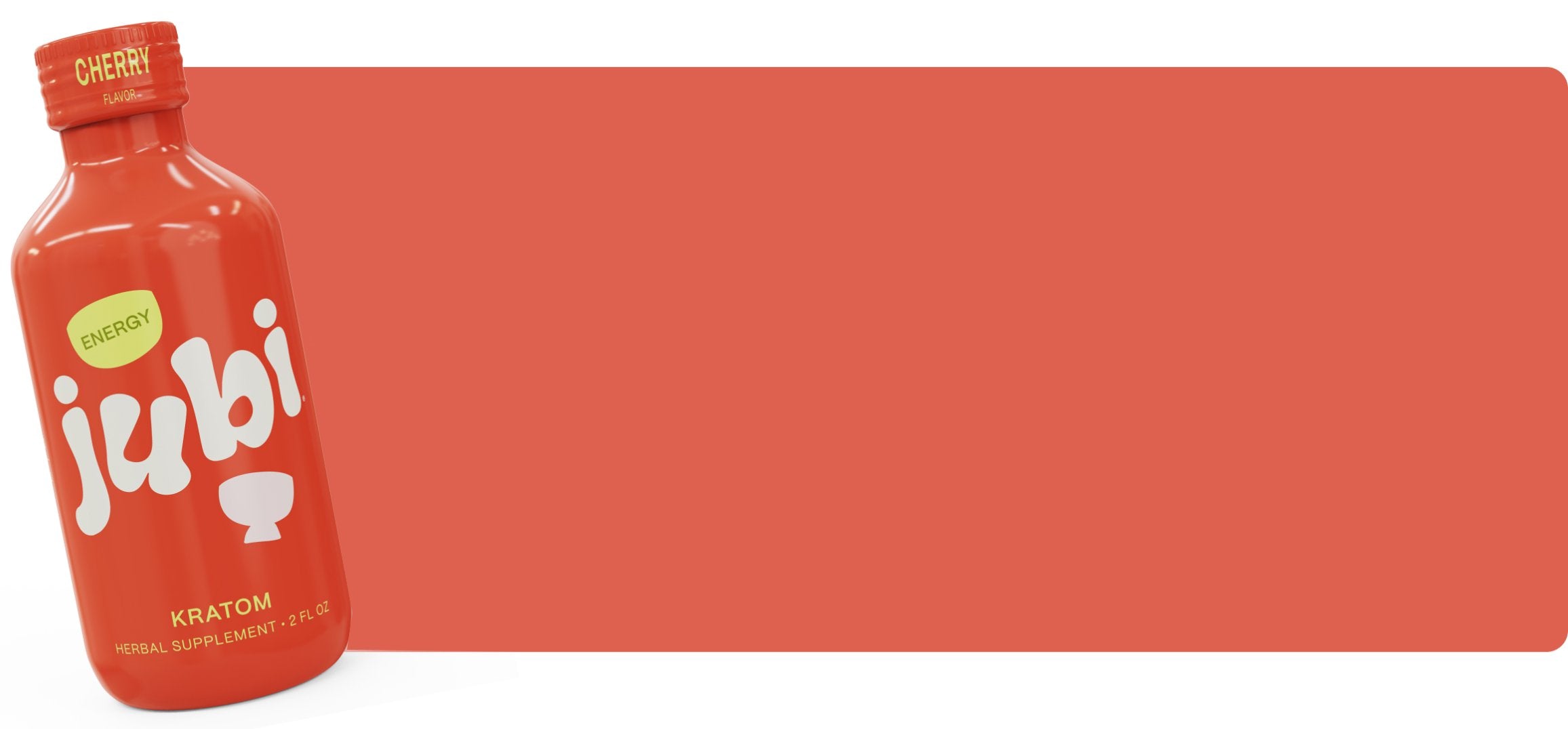
The practical implication: for productivity specifically, less is more. Starting at the lower end of a product's dose range and working up only if needed, rather than assuming more produces better focus, is the approach the dose-response curve supports. This is one of the clearest practical advantages of standardized ready-to-drink formats over powder - the Cherry Energy Shot at 50mg mitragynine and the Lime Focus Shot at 60–120mg (two 60mg servings) make it straightforward to stay within the energy-and-focus range without conversion math that powder dosing requires.
Strain Selection for Productivity: Why White Vein Specifically
Not all kratom has the same effect profile, and the productivity use case has a specific strain match. White vein varieties - white vein Maeng Da in particular - are specifically cultivated for high alkaloid content with an effect profile that favors alertness and motivation over relaxation and sedation.
White Maeng Da is widely cited as the go-to choice for energy and focus - it delivers a clean, focused experience that differs meaningfully from the heavier, more sedating character of red vein varieties. Green vein options offer a middle ground: the energetic effects come through with a more balanced, less intense quality - useful for users who find white vein too stimulating at energy-range doses, or who want sustained output across a longer work session rather than a sharp peak.
Jubi's energy and focus products - Cherry Energy Shot, Lime Focus Shot, Kratom Stick Packs - use White Vein and White Vein Maeng Da specifically because this strain alignment with the productivity use case is documented across the user evidence base. For a deeper look at what distinguishes strains and formats, see Kratom Stick Packs: The Complete Guide and Searching for Kratom Near Me? Here's What to Look For.
The Format Question: Shots vs. Stick Packs for Different Productivity Needs
The ready-to-drink format decision maps onto different productivity scenarios, and the right choice depends on the shape of the work session rather than personal preference alone.
Cherry Energy Shot (50mg mitragynine) - for morning energy and accessible first-time use. The lower dose stays clearly within the stimulation-and-focus range, arrives within thirty to sixty minutes, and suits a professional context as an energy drink replacement without committing to the higher dose of the Focus Shot.
Lime Focus Shot (60–120mg mitragynine) - for peak-demand sessions requiring maximum directed attention. Used strategically - before a presentation, a complex deliverable, an extended analytical sprint - rather than as daily habit. Customer S.B.'s description of feeling "at peace and focused" captures the specific quality of this effect that distinguishes it from pure stimulation. For a full breakdown of when to deploy this vs. the daily Lion's Mane shot, see Energy, Focus, or Relaxation: Finding Your Perfect Match.
Kratom Stick Packs (120mg mitragynine, sipped over 30–45 minutes) - for sustained energy across a long workday rather than a single-session peak. The gradual consumption curve produces a more extended, flatter energy profile than a single shot - useful for the early afternoon circadian dip window where the goal is keeping performance stable rather than hitting a peak. Five flavors - Cherry Lime, Tropical Passion, Peach Mango, Sour Apple, Grape - make it a practical daily format without palatability fatigue.
The Genuine Risks: What the Same Research Shows
The JAMA ecological momentary assessment study that documented productivity benefits also documented tolerance, withdrawal, and craving associated with more frequent use. These are clinical findings from rigorous research, not theoretical concerns, and a guide to kratom for productivity that omits them is not giving users what they need to make informed decisions.
Tolerance develops with daily use over time, meaning the same dose produces progressively less effect - which in the productivity context creates pressure to escalate dose, entering the range where productivity effects diminish and sedation increases. The practical implication that follows from this directly: using kratom strategically for demanding sessions rather than as a daily default sustains its productivity value longer than daily habitual use does.
Dependence is a documented risk for regular users. The JAMA study found that more frequent use was associated with withdrawal and craving. This is not unique to kratom among stimulant-class compounds - caffeine dependence is well-documented - but kratom's opioid receptor activity means the dependence profile is meaningfully different from caffeine and deserves proportionally more caution.
Individual variability is substantial. Some users experience clear, sustained productivity benefits at low doses with no significant side effects across months of strategic use. Others develop tolerance quickly or find the effect profile doesn't match what they were looking for. The ecological momentary assessment methodology is specifically valuable here because it captures this variability in real time rather than averaging across it.
Interaction risk with prescription medications - particularly anything CNS-active - is real and requires healthcare provider consultation before use. Kratom should not be combined with alcohol, opioids, sedatives, or other CNS-active substances under any circumstances.
For the specific regulatory context around concentrated 7-OH products - the highest-risk end of the kratom category - see 7OH Near Me: What to Check Before You Buy. For professionals specifically, the broader burnout and workplace performance context is covered in Jubi for Busy Professionals: A Smarter Beverage Choice.
Practical Guidelines for Productivity-Oriented Use
Drawing the above research together into operational guidelines:
Match dose to the actual need. Energy and alertness need lower doses than most first-time users expect. Stay within the 50–120mg mitragynine range for productivity use and resist the instinct to escalate when the effect feels subtle.
Use strategically, not habitually. Daily use builds tolerance and dependence risk. Reserve kratom for the days and sessions where the specific productivity lift is most valuable - the week's hardest deliverable, the most demanding client meeting, the project sprint - rather than using it as a daily background supplement.
Use strain-appropriate products. White vein Maeng Da for energy and focus. Red vein for recovery and relaxation. The strain mismatch is one of the most common reasons users report disappointing results.
Maintain the other foundations. Kratom for productivity doesn't substitute for sleep, hydration, nutrition, or structured work practices. It amplifies a functional baseline; it doesn't replace one. The morning routine context for these foundations is covered in How Lion's Mane Fits Into a Healthy Morning Routine.
Source from tested, transparent manufacturers. Third-party lab testing with published COAs, GMP-compliant manufacturing, and standardized dosing per serving are the non-negotiable quality standards that separate a product worth using from one that isn't - covered in detail in Searching for Kratom Near Me? Here's What to Look For.
Frequently Asked Questions
Does kratom actually improve productivity, or is this just user bias? The JAMA ecological momentary assessment study - prospective, real-time, methodologically rigorous - found most participants reported improvements in daily living and productivity. This is stronger evidence than retrospective surveys, though controlled trials in healthy adults specifically pursuing productivity goals don't yet exist.
Which kratom product is best for focus specifically? White Vein Maeng Da at energy-range doses - the Lime Focus Shot at 60mg per serving or the Kratom Stick Packs sipped gradually - is the most specifically aligned with the directed attention that demanding cognitive work requires.
How often should I use kratom for productivity? Strategic, occasional use - for the week's highest-demand sessions rather than daily - sustains the effect and manages tolerance risk better than habitual daily use.
Can I combine kratom with the Lion's Mane Shot? The Lion's Mane Clarity + Energy Shot and kratom-based products address different cognitive layers - immediate caffeine-based alertness plus progressive nootropic support vs. mitragynine-based directional energy and motivation. Using both on the same day is generally compatible, but be mindful of total stimulant load and don't combine with alcohol.
What are the signs that kratom use is becoming problematic? Tolerance requiring dose escalation, difficulty working without it, withdrawal symptoms between uses, or use escalating beyond the intended strategic occasions - these are the markers the clinical research associates with problematic use patterns and warrant honest self-assessment and potentially healthcare provider consultation.
These statements have not been evaluated by the Food and Drug Administration. These products are not intended to diagnose, treat, cure, or prevent any disease. Not for sale to persons under the age of 18 or the legal age for kratom use in your state. Consult a healthcare provider before use if you are pregnant, nursing, have a serious medical condition, or take prescription medications. Do not combine kava or kratom with alcohol. Some products may be habit forming or lead to addiction. For the full warning statement, visit DrinkJubi.com.
Jubi does not ship to: Alabama, Arkansas, Indiana, Louisiana, Vermont, Wisconsin, Sarasota County (FL), Union County (MS), Suffolk County (NY), Denver (CO), San Diego (CA), Oceanside (CA), or Washington D.C. Please verify local regulations before purchasing.