
Shop for kratom powder or capsules for more than a minute and you'll run into the same three words: red, green, and white. Every brand uses them. Most product pages tie each color to a mood - white for mornings, green for the middle of the day, red for winding down. But what do those colors actually describe, and how much should they guide what you buy?
This guide breaks it down in plain language: where vein colors come from, what the research says (including the parts that surprise people), and a simple way to choose a strain without overthinking it.
What "Vein Color" Means in Kratom
Kratom comes from the leaves of Mitragyna speciosa, a tropical tree native to Southeast Asia. If you look closely at a kratom leaf, the central vein and stem can show a reddish, greenish, or pale tint. That visible tint is where the red, green, and white names started.
In today's market, though, the color label usually means more than the leaf itself. A 2025 study in Frontiers in Plant Science notes that strain names sold in Western markets are most commonly based on the color of the finished powder, not just the vein color of the original leaf. In other words, "red" or "white" often reflects how the leaves were harvested, withered, and dried, as well as where they started.
You'll also see names stacked on top of the color, like Maeng Da, Bali, or Borneo. Those usually refer to a cultivar, a growing region, or a trade name. So "Red Maeng Da" tells you two things: the color category and the Maeng Da line. If you want the backstory on that name, our guide to Maeng Da kratom powder covers it.
How Each Color Is Usually Described
Here's how the kratom world typically positions each color. Treat these as common descriptions from brands and users, not guarantees. Everyone's experience is different.
White Kratom
White strains are generally positioned as the "daytime" option. People often reach for white when they want something that fits a bright, get-moving morning. At Jubi, our White Maeng Da is labeled "Energy" for exactly that reason.
Green Kratom
Green sits in the middle. It's often described as balanced - not as brisk as white is said to be, not as mellow as red. Many people treat green as their midday or "steady work session" pick. Our Green Maeng Da carries the "Focus" label.
Red Kratom
Red is the color most associated with evenings and slowing down. If someone tells you they prefer kratom after work rather than before it, there's a good chance they mean a red strain. Our Red Maeng Da is labeled "Calm."
Quick Comparison
|
Color |
Commonly positioned for |
Typical time people choose it |
Jubi label |
|
White |
Upbeat, get-going days |
Morning |
White Maeng Da "Energy" |
|
Green |
Balanced, steady sessions |
Midday |
Green Maeng Da "Focus" |
|
Red |
Slower, wind-down moments |
Evening |
Red Maeng Da "Calm" |
What the Research Actually Says
This is the part most strain guides skip, and it's worth knowing before you buy.
Users do report differences between colors. A 2023 survey published in the International Journal of Environmental Research and Public Health asked 644 current kratom users about red, green, and white products. Respondents described distinct experiences for each color, and those descriptions lined up closely with how strains are commonly marketed.
But the lab results didn't show a clear chemical split. In that same study, the products most respondents used were analyzed by an independent lab, and there were no significant differences in alkaloid content across the red, green, and white strains. The researchers suggested that expectations and marketing may shape how people feel about each color, and that minor alkaloids or other plant compounds could also play a role. They called for blinded studies to sort it out.
Growing conditions seem to matter a lot. A large study of kratom grown in Thailand, published in Plants, measured mitragynine (kratom's main alkaloid) across hundreds of leaf samples. Mitragynine content shifted with season and region, ranging from roughly 0.74% to 4.94% by weight in one collection. When the team compared red-veined and green-veined leaves, they found similar alkaloid levels without significant differences.
Processing can change the color itself. The 2025 Frontiers study found that drying temperature and withering time could turn the same batch of leaves into a greener or a more reddish-brown powder. Powder color tracked the post-harvest process more than it tracked alkaloid composition.
Not every study agrees. Some research on specific regional samples has found measurable differences in mitragynine between vein colors. The honest summary: color can be a useful shorthand, but it isn't a precise measurement of what's inside.
So Why Do Strain Colors Still Matter?
If the chemistry is this nuanced, why does every brand, including ours, still sell by color? A few good reasons:
- They're a shared language. "Red" and "white" give buyers and brands a common starting point, the same way "light roast" and "dark roast" help coffee drinkers talk about preferences.
- Personal experience is real to you. Plenty of people consistently prefer one color over another, and that preference is a perfectly valid way to shop.
- Consistency within a brand matters most. A strain label is only as meaningful as the sourcing, processing, and testing behind it. Buying the same color from the same trusted source gives you a far more repeatable experience than hopping between vendors.
That last point is the real takeaway. The color on the bag is the headline. Sourcing, lab testing, and batch consistency are the story.
How to Choose Your Strain (Without Overthinking It)
1. Start With the Time of Day
The simplest approach is to match the color to when you plan to use it: white for mornings, green for midday, red for evenings. It's a practical starting framework, and our guide on the best time of day for kratom goes deeper on planning around your schedule.
2. Try All Three Before You Commit
Product descriptions only get you so far. The best way to learn which color fits you is to try each one side by side, on different days, and note what you notice. That's exactly why we made the Maeng Da Kratom Capsules Variety Pack, which includes all three strains in one bottle, and the Maeng Da 60g Powder Variety Pack for people who prefer powder. Both save 20% versus buying single strains.
3. Pick Your Format
Once you know your color, the format is about lifestyle:
Powder suits people who like a mix-and-sip ritual and want flexible serving sizes. Shop Jubi Maeng Da Kratom Powder in 60g, 250g, and 1kg.
Capsules suit people who want no taste and no measuring. Jubi Maeng Da Vegetable Capsules come in 60, 150, and 300 count bottles.
Still deciding between formats? Our breakdown of kratom shots vs powder compares the two head to head.
4. Start Low and Keep Notes
Whatever color you choose, begin with a modest serving and give it time before deciding how it feels. Changing colors, serving sizes, and timing all at once makes it impossible to tell what's working. Our serving size guide for beginners walks through a sensible approach.
5. Check the Lab Work
Because alkaloid levels can vary with season, region, and processing, third-party testing matters more than the color on the label. Look for batch numbers and a certificate of analysis (COA) that screens for contaminants like heavy metals and microbes. The FDA has warned about kratom products contaminated with Salmonella and heavy metals, which is a good reminder to buy from brands that test. If you've never read one, here's how to read a kratom COA.
Prefer to Skip the Strain Decision?
Not everyone wants to think about vein colors. If you'd rather grab something already built around a goal, ready-to-drink shots take the guesswork out:
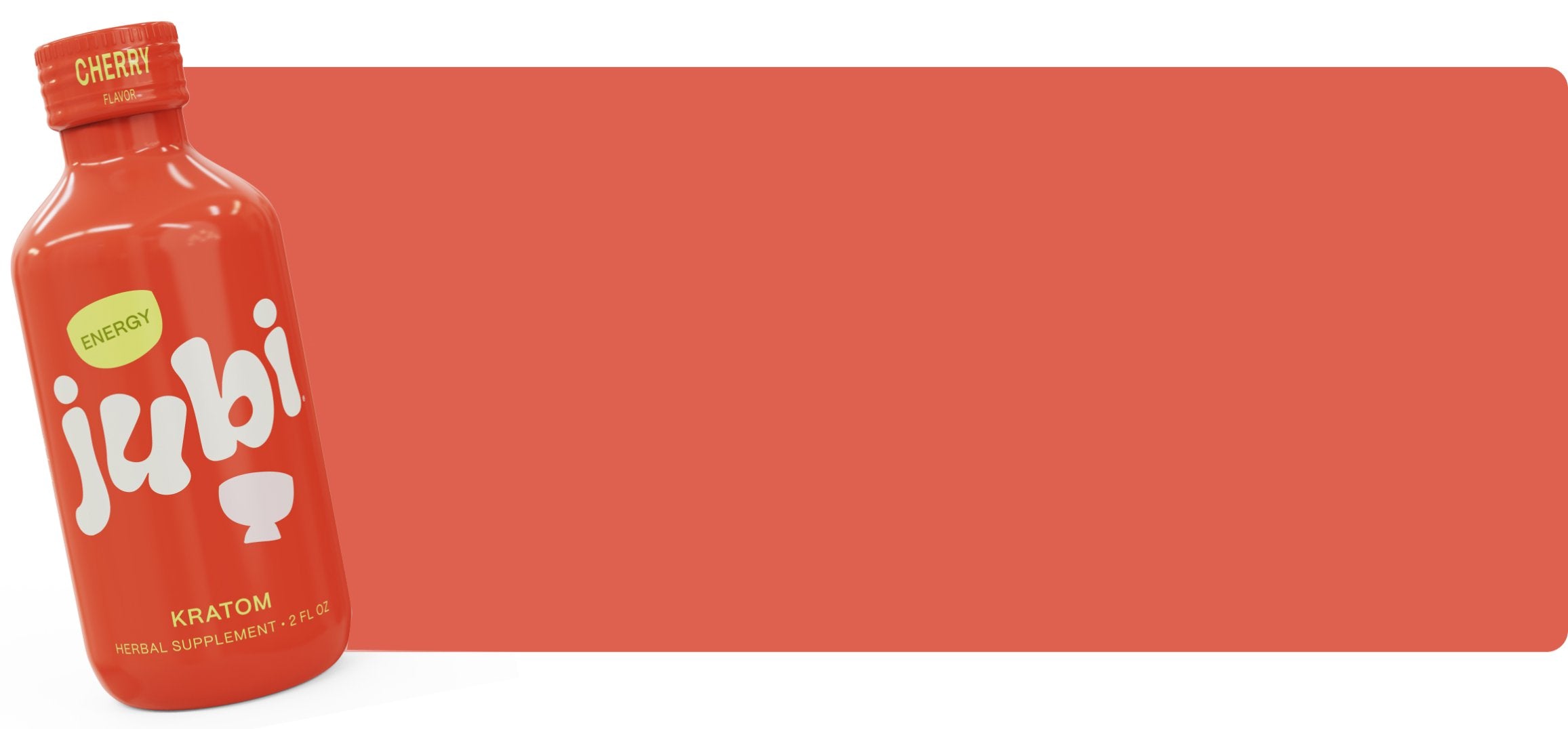
- The Cherry Energy Shot is made for get-going days.
- The Lime Focus Shot is built for steady work sessions.
- The Jubi Trial Pack lets you sample Energy, Focus, and Relax shots in one order.
Shots list the mitragynine per bottle right on the label, so you know exactly what you're getting. Browse the full shots collection to compare.
Storage Tips That Protect Any Strain
Whatever color you buy, light, heat, and moisture are the enemies of freshness. Keep powder and capsules sealed, cool, and dry, and away from direct sunlight. Our full guide to storing kratom covers the details.
Shipping and Legal Notes
Kratom laws vary across the US and change often. Jubi currently cannot ship kratom products to Alabama, Arkansas, Connecticut, Indiana, Rhode Island, Vermont, or Wisconsin, or to Sarasota County (FL), Union County (MS), Denver (CO), and San Diego (CA). Some states also set age limits or labeling rules, so always check your current state and local laws before ordering. For more on buying safely, see our first-time buyer checklist.
FAQ
Which is stronger: red, green, or white kratom?
There's no reliable answer based on color alone. A 2023 study found no significant alkaloid differences between red, green, and white products from the same vendor, and other research shows alkaloid levels shift with season, region, and processing. Strength depends more on the specific product, the source, and the serving size than on the color.
Is Maeng Da a color?
No. Maeng Da is a strain or trade name, and it's sold in red, green, and white versions. That's why you'll see names like Red Maeng Da and White Maeng Da.
What is the best kratom strain for beginners?
Many beginners start with green because it's commonly described as the most balanced, but there's no single right answer. A variety pack is an easy way to try all three at a low serving and find your own preference.
Can you mix kratom strains?
Some people combine colors, which is often called a "rotation" or "blend." If you're new, it's simpler to try one color at a time so you can tell how each one feels to you.
Does vein color change the taste?
Kratom is earthy and bitter regardless of color, and most people won't notice a big taste difference between strains. If taste is a dealbreaker, capsules or a flavored shot are easier options.
Are kratom shots made from a specific strain?
Shots are typically made from kratom extract and are labeled by mitragynine content and intended use rather than vein color. That makes them a good choice if you prefer clear numbers over strain names.
The Bottom Line
Red, green, and white are a helpful starting point, not a scientific guarantee. Research shows that growing conditions, harvest timing, and drying methods influence kratom as much as, and sometimes more than, the color on the label. Use color as a guide, try all three to learn your own preference, and stick with a brand that lab-tests every batch.
Ready to find your color? Start with the Maeng Da Capsules Variety Pack or explore the full powders collection at Jubi.
Disclaimer: These statements have not been evaluated by the Food and Drug Administration. This product is not intended to diagnose, treat, cure, or prevent any disease. Kratom products are for adults 21 and older. Do not use if pregnant, nursing, taking medication, or if you have a medical condition, and consult a healthcare professional before use. Do not combine with alcohol or other substances. Kratom laws vary by state and locality; check your local laws before purchasing. Learn more from the FDA and NIDA.