
A realistic guide to where kratom is actually sold locally in 2026, what each type of retailer looks like in practice, and why the answer to that question matters less than most people expect.
The short answer to "are there any stores selling kratom near me?" is probably yes - if you live in an urban or suburban area in a state where kratom is legal. The more useful answer is that finding kratom locally is the easy part. Finding kratom worth buying locally is a different, harder problem - and understanding why requires looking at what the local kratom retail landscape actually is, not what the Google Maps results imply.
Where Kratom Is Actually Sold: The Five Local Retail Types
Smoke shops and head shops are the most common result for a "kratom near me" search and the most likely place to find kratom in any city. These stores sell a mix of tobacco products, vape gear, glassware, and countercultural items - kratom arrived on their shelves because the customer overlap with existing clientele was high. What you get in a smoke shop depends almost entirely on which brands that specific store happens to stock, which is determined by their wholesale supplier relationship rather than any quality assessment. Selection is typically limited to two to four products, often with no Certificate of Analysis (COA) on display and staff who may know the product name without knowing much about strain differences, alkaloid content, or what makes one product better than another.
Gas stations and convenience stores represent the lowest tier of local kratom retail and the highest-risk purchase environment. Several major chains - Circle K, BP, Shell, some 7-Eleven locations - carry kratom products in their convenience section. These products are selected entirely on price and turn rate, not quality. Gas station kratom is the category where the core problems of local retail are most concentrated: no lab testing, no COA, inconsistent storage conditions (fluorescent light exposure degrades alkaloids over time), products that may have been on the shelf for months, and staff who have no information to offer beyond pointing at the product. Industry surveys consistently show this to be the category most likely to have mislabeled or adulterated content and least likely to have verified alkaloid concentrations. Your health isn't worth saving $5 on a product with no testing accountability.
Vape and CBD shops are a mid-tier option that has expanded its kratom offering as the botanical beverage category has grown. These stores typically know more about supplement-adjacent products than tobacco-primary shops and may carry a slightly better selection of tested brands. That said, quality is still highly variable by location - the store's primary business is vaping or CBD, and kratom is a secondary product without a dedicated buyer or quality standard in most cases.
Natural wellness and herbal supplement stores are the best local option where they exist. These stores - independent herbalists, natural product cooperatives, dedicated supplement retailers - are the most likely local retail environment to have staff who understand kratom, carry lab-tested products from reputable brands, and be able to answer questions about strain, vein color, and dosing. They're also the least common result for a "kratom near me" search, making them worth specifically looking for if you prefer to buy locally. Searching "herbal store kratom" or "botanical wellness kratom" rather than just "kratom near me" sometimes surfaces these options more reliably than a general map search.
Kratom bars and kava lounges are a distinct category that serves kratom in beverage form rather than selling product to take home. As covered in Why Kava Is Becoming America's Favorite Relaxation Drink, these venues have grown to over 300 locations nationally and offer the closest thing to a quality-controlled, staff-knowledgeable local experience - the preparation is done on-site, the staff understands the product, and there's a social context that most retail environments don't offer. If you're new to kratom or kava and want to try it without committing to a product purchase, a kratom or kava bar is the best local first experience available.
The Reality of Local Pricing
One consistent and well-documented finding across the kratom market is that local retail costs meaningfully more than direct-to-consumer online purchasing - typically around 40% more for the same or equivalent product. This makes sense structurally: local retailers buy at wholesale rates and add margin; they also carry far less inventory than online vendors, which means less competition and less price pressure. For regular users, that premium compounds significantly over months of purchasing.
The price difference alone is a reason to evaluate online purchasing seriously. But it's secondary to the quality and testing gap, which is the more important variable for anyone prioritizing safety and consistency over convenience.
What the Search Results Don't Tell You
The map pack that appears when you search "kratom stores near me" sorts results by distance and sometimes by rating - neither of which tells you anything about product quality, testing standards, or whether the specific products on the shelf have been verified. A five-star smoke shop that happens to carry untested kratom powder is a worse choice than a brand with published COAs ordered online, regardless of how the map ranks it.
There are three things the local search result cannot tell you that actually matter:
Whether the specific products on the shelf have batch-specific third-party lab results - the most important quality signal in the category, and one that's absent from most local retail environments.
How long the product has been sitting on the shelf - alkaloid content degrades with time and light exposure, meaning the product's stated potency at manufacture and its actual potency at the point of sale can differ meaningfully.
Whether the retailer's supplier has AKA GMP certification - the American Kratom Association's Good Manufacturing Practices standard, which is verifiable on the AKA's public roster and represents a baseline quality commitment that most local distributors don't hold.
What to Actually Ask in a Local Store
If you do buy locally, the three questions worth asking before handing over money:
"Can I see the Certificate of Analysis for this product?" A reputable product in 2026 will have a QR code on the packaging linking to a batch-specific COA from an independent third-party lab, confirming mitragynine content, 7-OH content, heavy metals, and microbial contamination. If the staff can't produce one or doesn't know what a COA is, the product hasn't been verified.
"What strain and vein color is this?" White vein and green vein products for energy and focus; red vein for relaxation and sedation. If the packaging says only "kratom extract" or "premium blend" without identifying strain and vein color, the labeling transparency isn't adequate for informed use.
"When was this stocked?" You're unlikely to get a precise date, but asking signals that you're a buyer who cares about freshness, and the response tells you something about how knowledgeable the staff actually is.
The Ready-to-Drink Alternative: What Local Retail Rarely Carries
The format that solves most of the local retail problems simultaneously - standardized dosing, cold-water extraction, third-party testing, flavor development, GMP manufacturing - is the ready-to-drink shot and stick-pack category. And it's the format least commonly found in local retail, because it requires refrigeration in some cases, has a shorter shelf life than powder and capsules, and doesn't fit the tobacco-shop retail model that dominates the local kratom landscape.
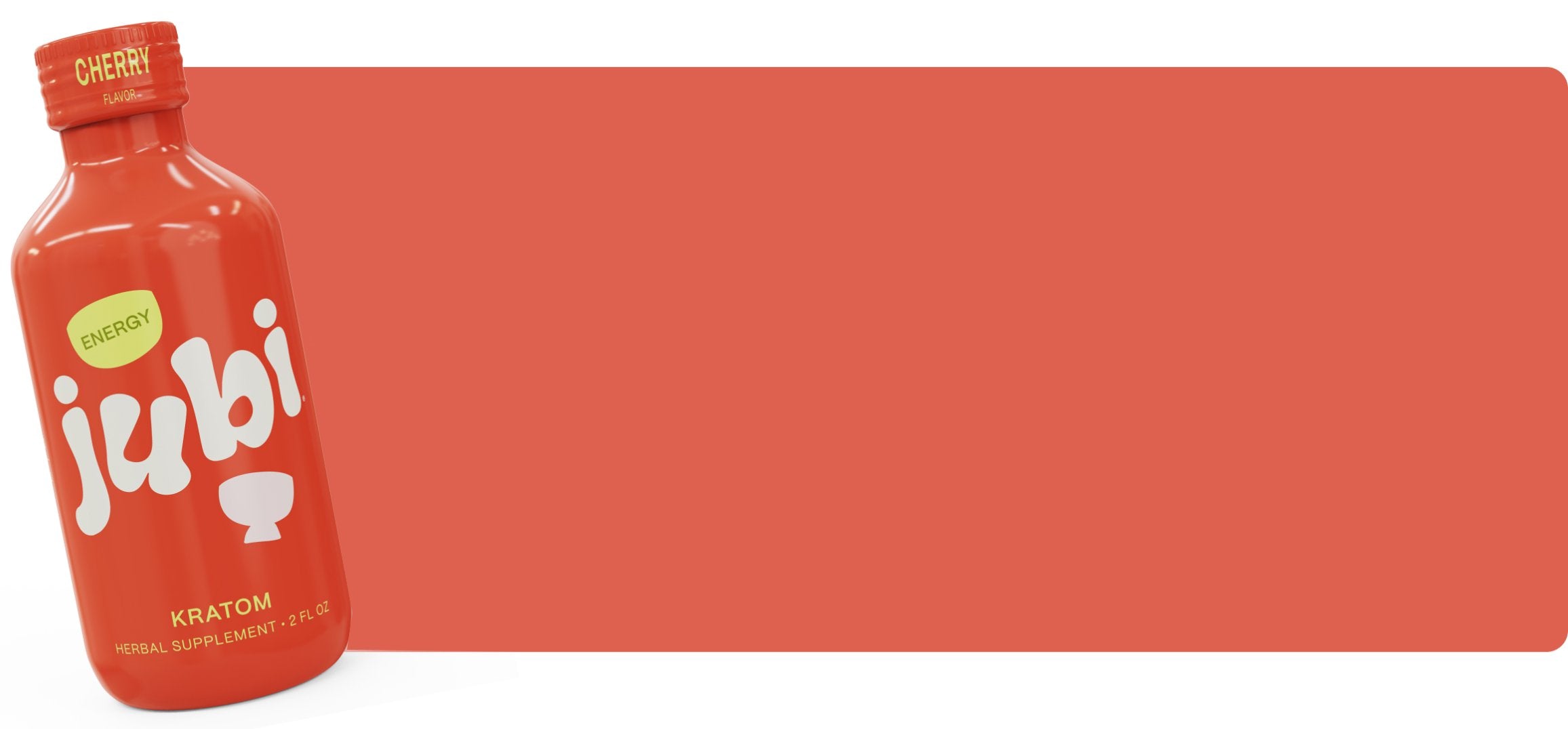
Jubi's lineup - the Cherry Energy Shot (50mg mitragynine), Lime Focus Shot (60–120mg), Kratom Stick Packs (120mg, five flavors), and 7OH Extract Shots - is specifically the category the "kratom near me" search is least likely to surface. The format advantages are real: no powder measuring, no capsule counting, no bitterness masking with sugar, standardized mitragynine content per serving verified by third-party testing. For a detailed breakdown of why the format matters as much as the source, see Searching for Kratom Near Me? Here's What to Look For and Jubi Review: What Makes This Functional Beverage Different?
The Legal Check: Do This Before Any Purchase
Before searching locally or ordering online, verifying your specific legal situation is non-negotiable - because kratom's legal status varies by state and locality in ways that local retail availability doesn't accurately reflect. A store stocking kratom is not proof that it's legal in that jurisdiction; enforcement priorities and retail compliance vary.
States with full statewide kratom bans as of mid-2026: Alabama, Arkansas, Indiana, Vermont, Wisconsin, and Louisiana. Local bans within otherwise-legal states include San Diego and Oceanside (California), Denver (Colorado), Sarasota County (Florida), Union County (Mississippi), Suffolk County (New York), and Washington D.C. Rhode Island reversed its ban in April 2026 and now operates under a regulatory framework.
The American Kratom Association maintains a current state-by-state legal guide worth checking directly before purchasing, particularly if you're in a state that has been considering new regulation - Ohio's Pharmacy Board proposed restrictions in early 2026 that are worth verifying before assuming prior legal status still applies.
Checking Local Availability vs. Buying Direct: The Practical Summary
Local retail makes sense if: you need kratom today and can find a natural wellness store or herbal shop with lab-tested brands, COAs on request, and knowledgeable staff. In this scenario, the premium over online pricing may be worth the immediacy. A kratom or kava bar is also a good local option for a first experience.
Online purchasing makes sense if: you're a regular user for whom the 40% local price premium compounds meaningfully over time, you want access to the full range of strains and formats rather than whatever two or three products a local store happens to stock, you want batch-specific COAs before you buy rather than having to ask for them in person, or you're specifically looking for ready-to-drink shots and stick packs that local retail rarely carries.
The practical middle ground: use local stores for immediate or trial purchases with whatever verification you can do on the spot, and move to direct purchasing for your regular supply once you know which product and format works for you. The Kratom & Kava Trial Pack and the Kratom & Kava Shot 4-Pack (code 4PackHalfOff) are both low-cost ways to get a full first impression of the ready-to-drink format before committing to a larger order. The full product lineup is available for browsing without commitment.
Frequently Asked Questions
What stores near me are most likely to carry kratom? Smoke shops and vape stores are the most common local retail type for kratom, followed by some herbal wellness stores and a minority of gas stations and convenience stores. Dedicated kratom shops exist in larger cities. Natural wellness stores tend to offer the best local quality.
Is kratom at a gas station safe to buy? Gas station kratom is generally the lowest-quality option in local retail - typically unsourced, untested, without a COA, and stored under conditions that degrade alkaloid content. It's the option most likely to be mislabeled or underperforming relative to stated content.
Why is kratom cheaper online than in stores? Local retailers buy at wholesale rates and add margin, with less price competition than the online market. Direct-to-consumer online purchasing typically runs approximately 40% less than local retail for equivalent quality.
How do I find the best local kratom store? Search specifically for natural wellness stores, herbalists, or botanical supplement shops rather than defaulting to the closest smoke shop. Call ahead and ask if they carry COAs for their kratom products - the answer tells you quickly whether the store is worth visiting.
Can I find Jubi products in local stores? Jubi's ready-to-drink shots and stick packs are available at drinkjubi.com with direct shipping to all locations where kratom is legal. The format is specifically designed for the quality and consistency that local retail rarely provides.
These statements have not been evaluated by the Food and Drug Administration. These products are not intended to diagnose, treat, cure, or prevent any disease. Not for sale to persons under the age of 18 or the legal age for kratom use in your state. Consult a healthcare provider before use if you are pregnant, nursing, have a serious medical condition, or take prescription medications. Do not combine kava or kratom with alcohol. Some products may be habit forming or lead to addiction. For the full warning statement, visit DrinkJubi.com.
Jubi does not ship to: Alabama, Arkansas, Indiana, Louisiana, Vermont, Wisconsin, Sarasota County (FL), Union County (MS), Suffolk County (NY), Denver (CO), San Diego (CA), Oceanside (CA), or Washington D.C. Please verify current local regulations before purchasing.