
The short answer, the longer answer for buyers who want to understand why the abbreviation matters in a purchasing context, and how this distinction connects to product labeling, COA reading, and vendor trust.
The short answer is no - MIT and mitragynine refer to the same compound. MIT is simply the abbreviation used in analytical chemistry, lab reports, and the kratom community for mitragynine, the primary active alkaloid in Mitragyna speciosa. There is no chemical difference, no product difference, and no potency difference between a product labeled "mitragynine" and one abbreviated as "MIT" on a COA or vendor listing.
If that's all you needed to know, you have it. If you want the fuller context - why the abbreviation exists, where it appears, when the distinction between MIT and other abbreviations (particularly 7-OH) actually matters, and how to use this information when evaluating a product - that's what the rest of this guide covers.
Where the Abbreviation Comes From
Mitragynine's chemical name in full is methyl (E)-2-((2S,3S)-3-ethyl-8-methoxy-1,2,3,4,6,7,12,12b-octahydroindolo[2,3-a]quinolizin-2-yl)-3-methoxyacrylate. Laboratory shorthand reduces this to the compound's common name - mitragynine - and then further to its standard abbreviation: MIT.
This abbreviation originates in analytical chemistry conventions, where compounds are regularly shortened to three or four letter codes in chromatography data, research papers, and testing documentation. Mitragynine's MIT abbreviation appears in HPLC (High-Performance Liquid Chromatography) data outputs, peer-reviewed research, and the COA format that accredited labs use across the kratom testing industry.
The broader kratom community adopted the abbreviation directly from lab documentation - which is why you see "MIT %" on COAs, "MIT tablets" in product names, and "MIT content" in community discussions on r/kratom and vendor review sites. It's shorthand, not a different substance.
Where You'll See MIT vs. Mitragynine Used
On a Certificate of Analysis: lab panels typically list the compound as "Mitragynine" in the header row, with the MIT abbreviation sometimes appearing in the column headers or summary fields. A COA that states "Mitragynine: 1.6%" and one that states "MIT: 1.6%" are reporting the same measurement.
On product labels: some vendors use the full word "mitragynine" for transparency and accessibility; others use "MIT" as a more compact shorthand, particularly on extract products where the milligram quantity is the primary information ("50mg MIT per serving"). Both are acceptable - neither implies a different compound.
In community discussions: experienced buyers discussing product quality, dosing, and vendor comparison almost universally use "MIT" as shorthand. "What's the MIT percentage on that batch?" and "What's the mitragynine percentage?" are identical questions.
In product names: "MIT tablets," "MIT shots," and "MIT extract" are product naming conventions that explicitly signal the product is built around mitragynine content rather than a broader kratom leaf formulation. This naming convention is useful for buyers specifically looking for standardised mitragynine products rather than generic kratom powder.
When the Abbreviation Distinction Actually Matters
The abbreviation MIT itself makes no practical difference - but the adjacent abbreviation 7-OH does, and understanding the two together is where the naming convention becomes genuinely useful for product evaluation.
MIT = mitragynine. The dominant alkaloid. 60–70% of natural kratom leaf alkaloid content. Adrenergic and serotonergic at energy-range doses. Lower MOR affinity than 7-OH. The compound behind energy, focus, and mood elevation at appropriate doses. Subject to standard kratom legal status - legal at the federal level and in most US states.
7-OH = 7-hydroxymitragynine. A minor alkaloid. Less than 2% of natural kratom leaf alkaloid content in whole-plant form. Significantly higher MOR affinity than mitragynine - pharmacologically closer to classical opioids at concentrated doses. Under active FDA enforcement action since July 2025, with a DEA scheduling recommendation pending.
A COA that discloses both MIT and 7-OH content is giving you the two most important alkaloid data points in the category. High MIT with low 7-OH is the profile of a standard, whole-plant-derived kratom product. High 7-OH relative to MIT - particularly in a product where 7-OH content is close to or exceeding the natural less-than-2% ratio - signals enrichment or concentration that carries a different pharmacological and regulatory profile.
This is the practical reason why knowing the abbreviations matters: it lets you read a COA and distinguish between products without having to ask the vendor to interpret it for you.
How This Affects Product Labeling to Look For
For any kratom product, the ideal label communicates the following clearly:
For powder products: mitragynine percentage per gram stated on the label or accessible via batch-specific COA. The 18x variance documented across commercial kratom - from 0.11% to 2.02% MIT - means this percentage is the only accurate basis for dose comparison across products and vendors.
For tablet and extract products: milligrams of mitragynine (MIT) per tablet or per serving, stated as a specific number and verified on the batch COA. Not gram weight of powder fill - that requires knowing the powder percentage to be useful.
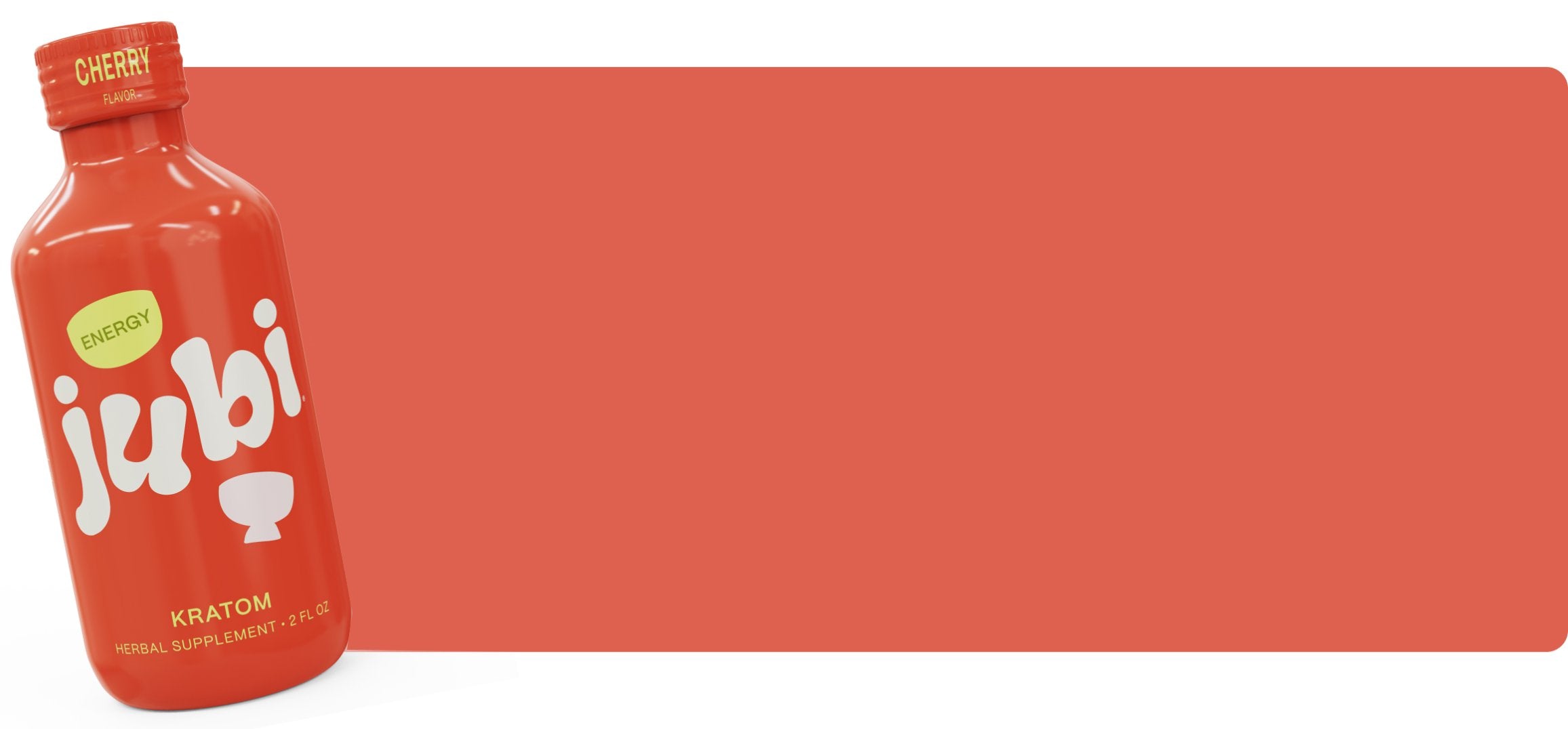
For ready-to-drink products: milligrams of mitragynine per bottle or serving, alongside disclosed 7-OH content per serving. Jubi's products state this directly - 50mg mitragynine per Cherry Energy Shot, 60–120mg per Lime Focus Shot, 120mg per Kratom Stick Packs.
Any product that describes potency only through marketing language - "high potency," "full spectrum," "maximum strength" - without a specific MIT percentage or milligram quantity is not meeting the transparency standard that batch COA documentation makes possible.
MIT in the Context of This Series
The MIT keyword cluster across this blog series uses the abbreviation deliberately - targeting buyers who are already familiar enough with kratom to search by alkaloid rather than by strain name. These are buyers past the exploration phase who are optimising for quality, consistency, and dose precision. For that audience, "MIT" is the natural search term; "mitragynine" is the explanation they give to someone new to the category.
If you arrived at this post from a search for "MIT vs mitragynine" specifically - you're likely already in the informed buyer category. The most directly useful next posts in the series for where you probably are in your buying journey:
If you're evaluating products: MIT Near Me: Tips for Choosing Trusted Local and Online Sellers and How to Find Trusted MIT Products Near Me
If you're comparing formats: MIT Tablets Explained: Everything You Need to Know and What to Consider Before Choosing Kratom Tablets
If you want the full MIT topic index: What Does MIT Mean in Kratom Products? - the hub post linking every MIT-related guide in the series
If you want to understand how 7-OH differs from MIT: 7OH Near Me: What to Check Before You Buy
Frequently Asked Questions
Is MIT the same as mitragynine? Yes - MIT is the standard abbreviation for mitragynine, the same way THC abbreviates tetrahydrocannabinol. No chemical, potency, or product difference exists between the two terms.
Why do some vendors use MIT and others use mitragynine? Vendor preference and audience familiarity. "MIT" is shorthand adopted from lab documentation and is more commonly used by experienced buyers and in community discussions. "Mitragynine" is the full name, more accessible to buyers earlier in their kratom journey. Both refer to the same compound.
Does a higher MIT percentage always mean a better product? Higher MIT percentage means higher mitragynine content per gram, which means smaller gram doses achieve the same mitragynine effect - a potency advantage. But potency is only one quality variable. Testing for heavy metals, microbial contamination, and 7-OH content is equally important. A 1.8% MIT product from a GMP-certified vendor with full-panel COA is better than a 2.0% MIT product from an untested source.
What's the difference between MIT and 7-OH on a COA? MIT (mitragynine) is the dominant alkaloid - lower MOR affinity, primarily adrenergic and serotonergic at energy doses. 7-OH (7-hydroxymitragynine) is a minor alkaloid with significantly higher MOR affinity, pharmacologically closer to classical opioids at concentrated doses. High 7-OH relative to MIT on a COA signals enrichment beyond natural whole-plant ratios.
What MIT percentage should I look for in quality kratom powder? 1.4–2.0% is the benchmark for quality, well-sourced kratom powder. Below 1.2% is a low-alkaloid product regardless of strain name or marketing claims.
These statements have not been evaluated by the Food and Drug Administration. These products are not intended to diagnose, treat, cure, or prevent any disease. Not for sale to persons under the age of 18 or the legal age for kratom use in your state. Consult a healthcare provider before use if you are pregnant, nursing, have a serious medical condition, or take prescription medications. Do not combine kava or kratom with alcohol. Some products may be habit forming or lead to addiction. For the full warning statement, visit DrinkJubi.com.
Jubi does not ship to: Alabama, Arkansas, Indiana, Louisiana, Vermont, Wisconsin, Connecticut, Tennessee, Sarasota County (FL), Union County (MS), Suffolk County (NY), Denver (CO), San Diego (CA), Oceanside (CA), or Washington D.C. Please verify local regulations before purchasing.