
Seven decisions that determine whether kratom tablets are the right format for your specific situation - and what to evaluate on each one before committing to a purchase.
Kratom tablets are one of several ways to consume mitragynine - alongside powder, capsules, ready-to-drink shots, and stick packs. Each format has a genuine use case it serves well and trade-offs it asks you to accept. The choice between them isn't about which is objectively better. It's about which matches your specific goals, experience level, dose requirements, and daily routine.
This guide works through seven considerations that should shape the decision before you buy kratom tablets - covering what tablets do well, where they fall short, and what the alternatives offer for buyers where the trade-offs don't work in their favour.
Consideration 1: Your Experience Level With Kratom
New users should avoid concentrated products, and all consumers should review 7-hydroxymitragynine content and other lab results before considering an extract.
Standard kratom leaf tablets - those containing kratom powder in compressed or encapsulated form rather than concentrated extract - are appropriate for intermediate users who have already established their kratom response through powder or capsule use. Extract tablets - those containing mitragynine or 7-OH at concentrations significantly above the natural leaf profile - are appropriate only for experienced users with well-established tolerance baselines.
This distinction matters specifically for tablets because the format makes underdosing and overdosing more consequential than with powder. With powder, adjusting by 0.5g increments is straightforward. With tablets, the unit dose is fixed - you take a whole tablet, half a tablet, or nothing. If the tablet's fixed dose is meaningfully above your functional dose, the only options are splitting (which introduces measurement imprecision) or buying a different product.
The honest first question before choosing tablets: have you established your mitragynine response with powder or another format first? If not, starting with powder or a ready-to-drink shot at a standardised milligram dose is the more calibration-friendly starting point. The full beginner's guide is in Kratom for Productivity: What Users Need to Know and Energy, Focus, or Relaxation: Finding Your Perfect Match.
Consideration 2: Whether the Tablet States Milligrams of Mitragynine, Not Just Grams of Powder
This is the single most important label distinction for tablets and the one most commonly overlooked.
Form and potency vary dramatically across formats - powdered leaf, capsules, concentrated extracts, and isolates all differ significantly, with extracts potentially many times stronger per gram than raw powders. A tablet that states "500mg kratom powder per tablet" is not telling you how much mitragynine it contains - it's telling you the weight of the carrier material. A 500mg tablet of 1.4% MIT powder contains 7mg of mitragynine. The same weight tablet of 1.8% MIT powder contains 9mg. The same weight tablet of an 80% extract contains 400mg. These are not interchangeable.
Trusted tablets state the milligrams of mitragynine per tablet directly - as a specific number verified by a batch-specific COA, not implied by the gram weight of the powder fill. Each kratom capsule typically contains 0.5 grams of powder - a standard consistent across major vendors in 2026. That single number is the foundation of every accurate dose calculation. Get it wrong and every serving that follows becomes an unreliable guess.
The practical pre-purchase checklist for tablet labeling: does the label state milligrams of mitragynine per tablet as a specific number? Does the batch-specific COA from an independent lab confirm that number? If the answer to either is no, the tablet's dose precision is unverifiable - which defeats the primary advantage of tablets over powder.
Consideration 3: Which Vein Color Matches Your Intended Use
Different kratom strains vary in alkaloid profiles and potency, requiring adjusted dosing approaches. Understanding these differences prevents under- and overdosing when switching strains.
The vein color on the tablet determines the effect profile you'll get from a given dose - and choosing the wrong vein color is the most common reason a first kratom tablet purchase produces results that don't match what the buyer was looking for.
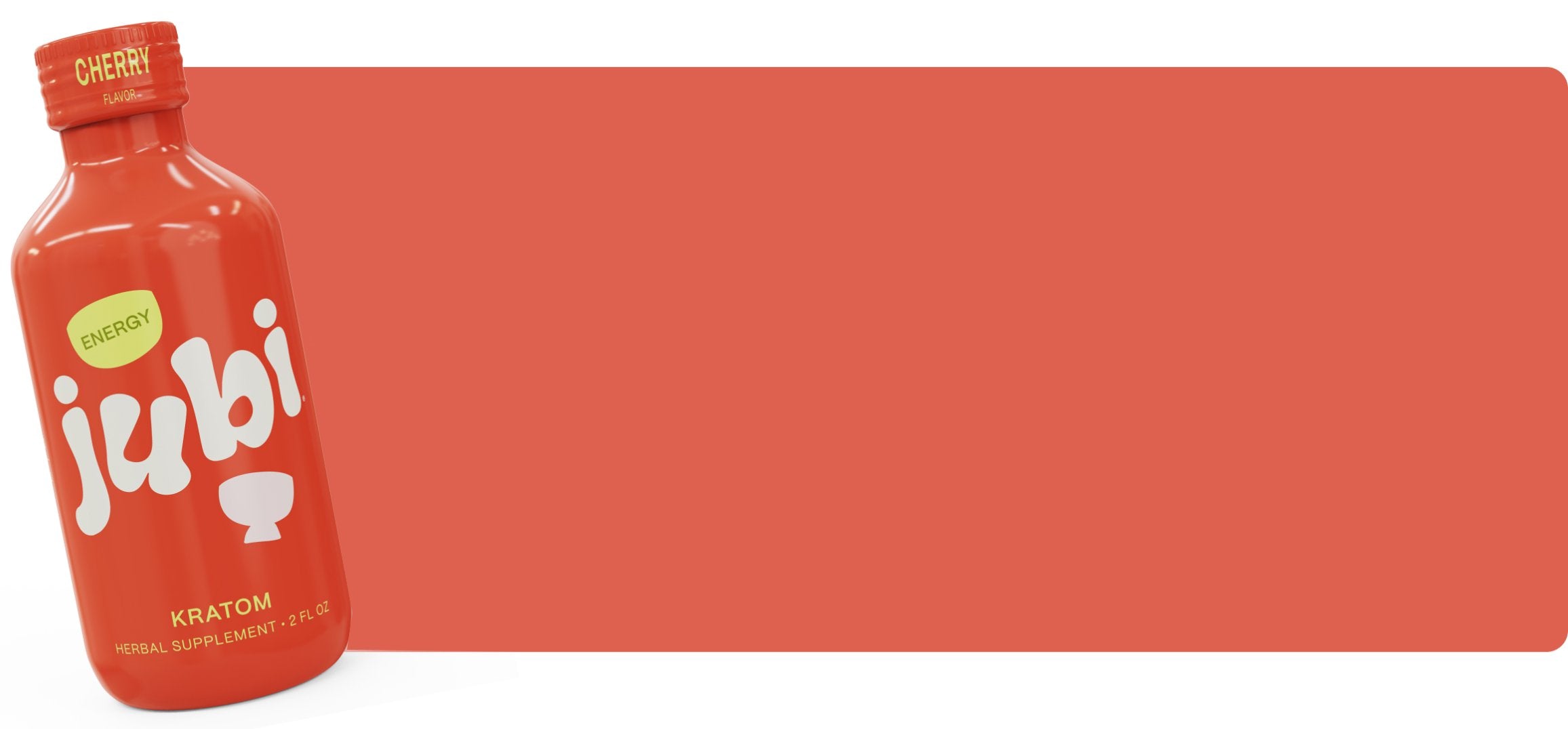
White vein tablets - higher mitragynine-to-sedating-alkaloid ratio, harvested from younger leaves. The right choice for energy and focus use cases. Common varieties include White Maeng Da, White Thai, White Borneo, and White Horn - all with a higher mitragynine ratio and a stimulating character. White vein tablets are the format aligned with the same energy and focus use case that Jubi's Lime Focus Shot and Cherry Energy Shot serve.
Green vein tablets - balanced profile between stimulation and relaxation, harvested at mid-maturity. Suitable for sustained focus without the intensity of white vein, or for extended work sessions where moderate energy across a long window is more useful than a sharp peak.
Red vein tablets - mature-leaf alkaloid profile weighted toward relaxation, sedation, and MOR-mediated analgesia. The wrong choice for energy and focus; the right choice for evening relaxation and stress relief.
A tablet labeled only "kratom tablet" or "Maeng Da tablet" without specifying vein color doesn't tell you which effect profile to expect. Vein color should be on the label - and any tablet that omits it is missing information worth having before purchase.
Consideration 4: The Absorption Curve the Tablet Format Produces
Choosing between a tablet and a shot or stick pack isn't just a format preference - it's a decision about absorption curve and onset timing that has practical implications for how you deploy the product.
Liquid formats feel faster while tablets feel more gradual and sustained. Typical onset is within 15–60 minutes, with peak effects around 1–2 hours and total duration commonly 3–8 hours.
Tablets require dissolution in the GI tract before alkaloid absorption begins - producing slower onset than a pre-dissolved liquid shot but typically a more extended, flatter effect curve. For buyers who find shot onset too abrupt or too short in duration, the tablet's gradual curve is a genuine advantage. For buyers who need the effect to arrive within thirty minutes of a specific session start, the shot format's faster onset is the practical choice.
The specific use-case comparison:
Tablet suits you if: you want a gradual, extended energy or relaxation curve; you're comfortable with a forty-five-to-ninety-minute onset; you prefer a solid dose form that requires no liquid preparation beyond water for swallowing.
Ready-to-drink shot suits you if: you want faster, more predictable onset; you want format flexibility - sipping, portable, no swallowing a solid form; you want mitragynine milligrams per serving stated as a fixed number rather than calculated from tablet weight. Jubi's Cherry Energy Shot at 50mg and Lime Focus Shot at 60–120mg both serve energy and focus use cases with the faster liquid absorption curve that tablets don't offer.
The full format comparison is in MIT Tablets Explained: Everything You Need to Know.
Consideration 5: The Quality Verification Standard the Tablet Meets
Consumers considering this type of product should review the current label, serving instructions, lab reports, ingredient disclosures, shipping restrictions, and return policy before buying.
The quality verification framework that applies to kratom tablets is identical to the framework for any mitragynine product - but the tablet format has one specific additional consideration that powder doesn't: fill weight consistency.
GMP-compliant tablet manufacturing controls the fill weight variance across a production run - what determines whether "50mg per tablet" actually means 50mg in every tablet, or 45–55mg across a range that makes dose precision unreliable. Without AKA GMP certification covering the tablet manufacturing process specifically, per-tablet dose consistency isn't guaranteed by the stated milligram number alone.
The verification checklist for any kratom tablet before purchase:
-
Batch-specific COA from an ISO 17025-accredited independent lab - confirming mitragynine milligrams per tablet, 7-OH content, heavy metals (lead below 0.5ppm, arsenic below 2.0ppm), and microbial screening
-
AKA GMP certification verified at americankratom.org
-
Vein color and cultivar stated on the label
-
Manufacturer identified - not just a brand name without a traceable manufacturer
The full quality verification framework is in How to Find Trusted MIT Products Near Me and What Makes Premium Kratom Different?.
Consideration 6: Whether the Tablet Contains Standard Mitragynine or Concentrated 7-OH
This is the most important safety distinction in the entire tablet category - and the one most frequently obscured by product labeling.
Standard mitragynine tablets and concentrated 7-hydroxymitragynine tablets are not the same product. They carry different pharmacological profiles, different dependency risks, different regulatory status, and different adverse-event histories. In July 2025, the FDA formally recommended to the DEA that certain 7-hydroxymitragynine formulations be considered for scheduling under the Controlled Substances Act - a step that does not affect natural kratom leaf but signals continued federal scrutiny of concentrated 7-OH products specifically.
The label identification: a standard mitragynine tablet should state mitragynine milligrams per tablet as the primary active ingredient. A 7-OH tablet will state 7-hydroxymitragynine milligrams per tablet, or use product names that reference "7OH," "7-hydroxy," or "enhanced kratom." The 7-OH category carries the concentrated-extract caution that the FDA's July 2025 action specifically targeted.
If a tablet is marketed as "enhanced kratom," "extra strength," or "maximum potency" without specifying whether the potency comes from higher-quality mitragynine sourcing or from added 7-OH concentrate, the 7-OH content should be directly disclosed on the COA before purchase. Undisclosed 7-OH enrichment is a quality and safety concern in the tablet category - particularly for buyers who are specifically looking for a standard mitragynine product.
The full 7-OH context is in 7OH Near Me: What to Check Before You Buy and 18mg 7OH Tablets Explained.
Consideration 7: Whether Tablets Are Actually the Right Format for Your Routine
Before purchasing kratom tablets specifically, it's worth honestly evaluating whether the tablet format suits your daily routine - or whether an alternative format would serve your goals more practically.
Tablets suit your routine if: you're accustomed to supplement tablets, you don't want a liquid format, and you're comfortable with the longer onset window and the fixed-dose constraint that tablets require.
Ready-to-drink shots may suit your routine better if: you want portability without preparation, faster onset timing for session-specific deployment, mitragynine milligrams per serving as a fixed standardised quantity, or a flavour profile that makes daily use enjoyable rather than neutral. Jubi's Kratom Stick Packs specifically address the "sustained daily use" use case that tablets serve, but with a gradual-sipping format across 16oz of water, standardised 120mg mitragynine per pack, and five flavour varieties that support daily palatability.
Powder may suit your routine better if: you want maximum dose flexibility below the per-tablet increment, you're still calibrating your mitragynine response, or you prefer to adjust by gram fractions across different sessions.
Timing guidance is consistent regardless of format - morning (6–10am) is best for stimulating white and green strains targeting energy goals; midday (11am–2pm) is flexible for any strain; afternoon (3–6pm) suits balanced or relaxing strains with stimulating varieties avoided. Whichever format you choose, tablets' longer onset window means deployment needs to start thirty to sixty minutes earlier than the session you're targeting.
The Decision Summary: Is a Kratom Tablet Right for You?
A kratom tablet is the right format choice when: you have established your mitragynine response with another format; the tablet states milligrams per tablet as a specific verified number; the vein color matches your intended effect; the COA confirms GMP-manufactured fill weight consistency; and the tablet's gradual onset curve suits your deployment needs better than a faster-onset shot.
A kratom tablet is not the right choice when: you're new to kratom without an established baseline; the label doesn't disclose milligrams of mitragynine per tablet; the product is enhanced or fortified without disclosed 7-OH content; or the fixed-dose increment doesn't match the dose you need.
For buyers whose situation doesn't fit the tablet format, Jubi's ready-to-drink lineup offers the mitragynine precision of a standardised milligram-per-serving product in a faster-onset, flavour-developed format: Cherry Energy Shot at 50mg for everyday energy, Lime Focus Shot at 60–120mg for peak-demand focus, and Kratom Stick Packs at 120mg for sustained daily energy. The Kratom & Kava Trial Pack is the lowest-commitment way to experience the ready-to-drink format before committing to a regular order.
Frequently Asked Questions
Are kratom tablets better than powder? Neither is objectively better - tablets offer fixed-dose convenience at the cost of dose-increment flexibility. Powder offers fine-grained dose adjustment at the cost of batch-percentage calibration complexity. Which suits you depends on where you are in the dose-calibration process.
How do I know if a kratom tablet's dose is accurate? A batch-specific COA from an ISO 17025-accredited lab confirming milligrams of mitragynine per tablet is the only external verification. GMP-compliant manufacturing covering fill weight consistency is the process verification. Both are needed together for genuine dose accuracy confidence.
What's the difference between a kratom tablet and a kratom capsule? Tablets are compressed solid forms; capsules contain powder enclosed in a shell. Both typically contain kratom leaf powder at a stated gram weight - the mitragynine content depends on the powder's percentage, which requires a COA to verify. Extract tablets contain concentrated alkaloid content at a stated milligram quantity - a meaningfully different dose calculation.
How long do kratom tablets take to work? Onset is typically within 15–60 minutes, with peak effects around 1–2 hours. The tablet dissolution step makes onset slower than pre-dissolved liquid shots - plan deployment thirty to sixty minutes before the session you need the effect for.
Should I avoid kratom tablets if I'm new to kratom? For standard powder-content tablets, starting with lower-potency options after some experience with powder is the sensible approach. For extract tablets and any product with concentrated 7-OH, new users should not start here - these are experienced-user products.
These statements have not been evaluated by the Food and Drug Administration. These products are not intended to diagnose, treat, cure, or prevent any disease. Not for sale to persons under the age of 18 or the legal age for kratom use in your state. Consult a healthcare provider before use if you are pregnant, nursing, have a serious medical condition, or take prescription medications. Do not combine kava or kratom with alcohol. Some products may be habit forming or lead to addiction. For the full warning statement, visit DrinkJubi.com.
Jubi does not ship to: Alabama, Arkansas, Indiana, Louisiana, Vermont, Wisconsin, Sarasota County (FL), Union County (MS), Suffolk County (NY), Denver (CO), San Diego (CA), Oceanside (CA), or Washington D.C. Please verify local regulations before purchasing.