
The complete hub guide to mitragynine - what the abbreviation means, the science behind the compound, how it appears across different product formats, and everything written in this series about MIT products.
If you've seen "MIT" on a kratom label, a COA, a vendor listing, or a community discussion and wanted a clear explanation of what it actually refers to - this is the starting point. If you're an experienced buyer who already knows the abbreviation and wants the specific post on buying, dosing, trust verification, or format comparison, the navigation section below links directly to each topic.
What MIT Stands For
MIT is the standard abbreviation for mitragynine - the primary active alkaloid in Mitragyna speciosa, the kratom plant. It appears in:
- Lab reports and Certificates of Analysis - where "MIT %" or "Mitragynine %" refers to the percentage of the total powder weight that is pure mitragynine
- Vendor product listings - particularly for extract products where "MIT tablets," "MIT shots," or "80% MIT extract" signal the mitragynine concentration per dose
- Community discussions - on r/kratom, forums, and review sites where informed buyers compare products by MIT content rather than brand name or strain label
- COA panel headers - alongside "7-OH" (7-hydroxymitragynine), heavy metals, and microbial results as the primary quality and safety data points
The abbreviation is shorthand adopted from analytical chemistry - the same way "CBD" shortens cannabidiol and "THC" shortens tetrahydrocannabinol. In the kratom market specifically, using "MIT" signals a buyer who is evaluating products by alkaloid content rather than marketing language.
What Mitragynine Is: The Science
Mitragynine is the most abundant alkaloid in the kratom leaf, making up approximately 60–70% of total alkaloid content. It is the compound most directly responsible for kratom's dose-dependent energy, focus, mood, and relaxation effects.
At the receptor level, mitragynine operates through three primary pathways:
Adrenergic activation - mitragynine's interaction with adrenergic receptors increases norepinephrine release, producing stimulation and wakefulness. This is the primary mechanism behind the energy and alertness effects at lower doses - the same receptor class that governs the body's alertness response, activated by mitragynine without the same cortisol-compounding effect that caffeine produces through adenosine blockade.
Serotonergic modulation - mitragynine influences serotonin (5-HT1A) pathways, contributing to the mood-elevation and motivational quality that users describe alongside the energy effect. This is the mechanism behind what users consistently describe as "directional" focus - alertness aimed at the task at hand rather than generalised stimulation.
Mu-opioid receptor partial agonism - mitragynine is a partial agonist at mu-opioid receptors (MOR), with significantly lower receptor affinity than 7-hydroxymitragynine. At energy-range doses, the MOR component is minor relative to the adrenergic and serotonergic effects. At higher doses, MOR activity becomes more prominent, shifting the effect profile toward relaxation and sedation.
The dose-response relationship is the single most important practical variable in understanding mitragynine's effects. At 1–3g of powder (or equivalent milligrams of mitragynine from extract products), the effect is primarily stimulant and focus-oriented. As dose increases, effects shift progressively toward relaxation and sedation - which is why the same compound that serves as an energy tool at low doses serves as a sleep and relaxation tool at higher doses.
Mitragynine's half-life is notably extended - research has documented mean half-lives of 43–68 hours after multiple doses, meaning it accumulates with daily use and tolerance builds faster than single-session experience suggests.
Why MIT Percentage Matters on a COA
The mitragynine percentage on a Certificate of Analysis is the single most useful quality data point in the kratom market. A 2023 study published in Drug and Alcohol Dependence found that commercially available kratom ranges from 0.11% to 2.02% mitragynine content - an 18x variance driven entirely by vendor sourcing, processing, and handling practices rather than anything inherent to the plant.
This variance matters practically because a dose measured in grams of powder is not a dose measured in milligrams of mitragynine. A 3g serving of 1.2% MIT powder delivers 36mg of mitragynine. The same weight of 1.8% MIT powder delivers 54mg - 50% more active alkaloid at identical gram weight. Users who measure by spoon or by a fixed gram weight without knowing the batch's MIT percentage are dosing inconsistently across every bag they purchase.
Quality kratom powder falls in the 1.4–2.0% mitragynine range. Below 1.2% is a low-alkaloid product regardless of strain name. Any product without a disclosed mitragynine percentage - on a batch-specific COA from an independent lab - is not providing the quality information worth paying for.
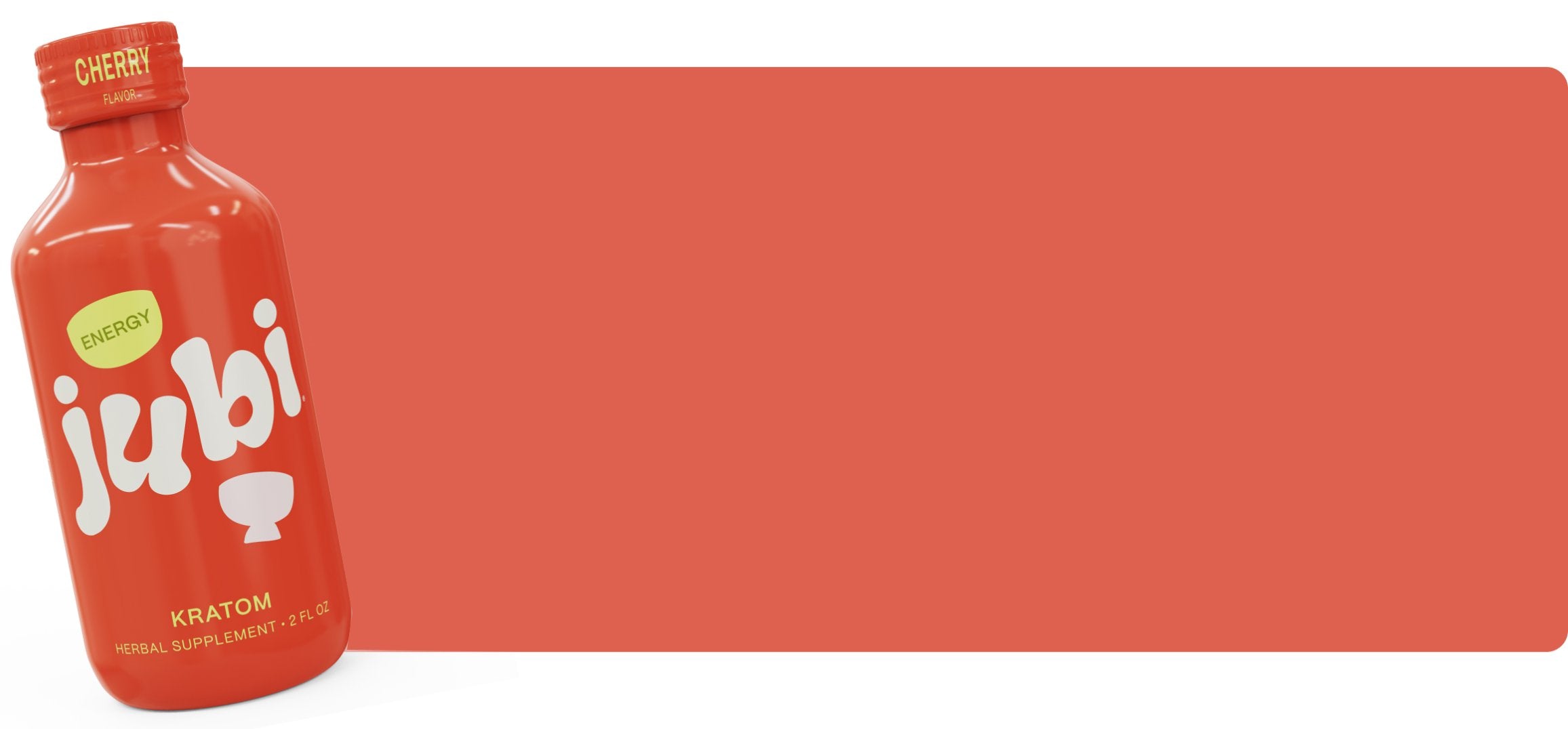
For ready-to-drink and extract products, the relevant figure shifts from percentage to milligrams per serving - a fixed number verified at manufacture. Jubi's products state this directly: 50mg per Cherry Energy Shot, 60–120mg per Lime Focus Shot, 120mg per Kratom Stick Pack.
How MIT Appears Across Product Formats
Standard leaf powder - MIT content stated as a percentage of total powder weight. Varies by batch; requires knowing the percentage to calculate the mitragynine dose per gram.
Capsules - contain kratom leaf powder at a stated gram weight per capsule (typically 0.5g). The mitragynine per capsule depends on the powder's MIT percentage - not the capsule weight alone.
MIT tablets - compressed solid forms containing a stated milligram quantity of mitragynine, extracted and standardised from kratom leaf. The per-tablet milligram figure is the relevant dose metric, verified on the batch COA. Fill weight consistency across tablets requires GMP-certified manufacturing.
Ready-to-drink shots - pre-dissolved mitragynine in a liquid format, stated as milligrams per bottle or per serving. Faster absorption than tablets; standardised per-serving dose without batch-percentage math. Jubi's Cherry Energy Shot, Lime Focus Shot, and 7OH Extract Shots all use this format.
Kratom stick packs - powder or extract mixed into a larger liquid volume (typically 16oz) and sipped gradually. Jubi's Kratom Stick Packs deliver 120mg mitragynine from White Vein Maeng Da, sipped over 30–45 minutes for a gradual sustained energy curve.
80% MIT extract - high-concentration extract powder where 80% of the extract weight is pure mitragynine. One of the highest-concentration standard mitragynine products available; requires dose reduction of 40–160x compared to equivalent gram weights of leaf powder. Distinguished from 7-OH (7-hydroxymitragynine) products, which are pharmacologically distinct and under separate regulatory scrutiny.
MIT vs. 7-OH: The Critical Distinction
The two alkaloid abbreviations that appear most often together on COAs and product labels are MIT (mitragynine) and 7-OH (7-hydroxymitragynine). They are not interchangeable - they are pharmacologically distinct compounds with different potency levels, different receptor profiles, and different regulatory status.
Mitragynine (MIT) is the dominant alkaloid - 60–70% of total leaf alkaloid content. Its MOR affinity is lower than 7-OH's, making it the lower-risk compound with a well-established energy and focus use case at appropriate doses.
7-Hydroxymitragynine (7-OH) is a minor alkaloid - less than 2% of natural leaf alkaloid content. Its MOR affinity is approximately 10 times that of morphine in concentrated form, and it is specifically the compound targeted by the FDA's July 2025 scheduling recommendation, December 2025 product seizures, and ongoing Congressional pressure for emergency DEA scheduling in 2026.
A high-MIT product and a high-7-OH product are not the same category of product. They carry different pharmacological profiles, different dependency risks, different regulatory trajectories, and different adverse-event histories. Any kratom product's COA should disclose both MIT and 7-OH content - enabling buyers to distinguish between a standard mitragynine product and one with elevated or artificially enriched 7-OH content.
The Complete MIT Topic Index: Everything in This Series
This series has produced a comprehensive body of content on mitragynine products across buying guides, quality frameworks, format comparisons, and trust verification. Navigate directly to the specific topic you need:
Understanding Mitragynine
- What Is 80% Mitragynine Extract? - What the percentage means, how 80% extract is made, how it compares across the extract spectrum
- MIT Tablets Explained: Everything You Need to Know - How the tablet format changes absorption, the dose framework by experience level, quality checklist
- What Makes Premium Kratom Different? - The five quality stages where premium is made or lost
- Maeng Da Kratom Powder Benefits Explained - White, green, and red Maeng Da compared; why 15–30% higher alkaloid content changes dosing
Buying Guides
- MIT Near Me: Tips for Choosing Trusted Local and Online Sellers - The five-point seller checklist; what MIT percentage tells you
- Where to Buy Premium MIT Products Near Me - Local retail landscape, online purchasing advantages, ready-to-drink format as consistency solution
- How to Find Trusted MIT Products Near Me - Red flags and green flags; the step-by-step trust verification process
- How to Compare Kratom Stores Near Me Before Buying - Six-criteria comparison scorecard for local stores
- Searching for Kratom Near Me? Here's What to Look For - The full local purchase quality checklist
- Are There Any Stores Selling Kratom Near Me? - Retail type breakdown by quality likelihood
Format Comparisons
- What to Consider Before Choosing Kratom Tablets - Seven decisions before buying any kratom tablet
- Why Portable MIT Tablets Are Growing in Popularity - Consumer and market forces driving tablet growth
- Kratom Shot Benefits for Energy and Focus - How the shot format changes onset, dose precision, and the practical energy use case
- Kratom Stick Packs: Benefits and Everyday Uses - The gradual-curve format for sustained afternoon energy
Product-Specific Guides
- Cherry Energy Shot Benefits for Everyday Energy - 50mg White Vein mitragynine for daily accessible energy
- Lime Focus Shot Benefits for Productivity - 60–120mg White Vein Maeng Da for peak-demand focus sessions
- Lime Focus Shot vs. Coffee for Mental Clarity - Mechanistic comparison of mitragynine and caffeine for focus
- Kratom for Productivity: What Users Need to Know - JAMA research, strategic deployment, honest limits
Advanced Topics
- Why Professionals Are Exploring Kratom-Based Energy Drinks - Pharmacology, workplace context, risk picture
- 7OH Near Me: What to Check Before You Buy - The critical MIT vs. 7-OH distinction and regulatory context
- 7OH Extract Shots: Benefits, Uses, and Beginner's Guide - For experienced kratom users specifically
- 18mg 7OH Tablets Explained - Jubi's most conservative 7OH entry point
Legal Status of MIT Products in 2026
Mitragynine is the primary alkaloid in kratom - kratom's legal status applies to MIT-containing products across all formats.
States with full kratom bans as of August 2026: Alabama, Arkansas, Indiana, Louisiana, Vermont, Wisconsin, Connecticut (banned March 25, 2026), and Tennessee (banned July 1, 2026).
Local bans within otherwise-legal states: San Diego and Oceanside (California), Denver (Colorado), Sarasota County (Florida), Union County (Mississippi), Suffolk County (New York), and Washington D.C.
The American Kratom Association's state-by-state legal guide and the DEA's kratom fact sheet are the most reliable current references before any purchase.
Start Here: The Right MIT Product for Your Situation
If you're new to mitragynine products and want to find the right starting point rather than reading every guide above, the decision is straightforward:
For everyday energy replacing coffee: Cherry Energy Shot - 50mg mitragynine, most accessible entry point, daily use appropriate.
For peak-demand focus sessions: Lime Focus Shot - 60–120mg mitragynine, strategic deployment for demanding cognitive work.
For sustained afternoon energy: Kratom Stick Packs - 120mg mitragynine sipped over 30–45 minutes, gradual curve for extended performance.
For a first cross-category experience: Kratom & Kava Trial Pack - energy, focus, and relaxation in a single low-commitment order.
The full product lineup covers everything from first-experience products through experienced-user formats.
Frequently Asked Questions
What does MIT stand for in kratom? Mitragynine - the primary active alkaloid in the kratom plant, abbreviated MIT in lab reports, COAs, and vendor listings.
What is a good MIT percentage for kratom powder? 1.4–2.0% is the quality benchmark for well-sourced powder. Below 1.2% is a low-alkaloid product. The 18x variance documented across commercial kratom products is driven entirely by vendor sourcing and handling - not the plant itself.
What's the difference between MIT and 7-OH? Mitragynine (MIT) is the dominant alkaloid - 60–70% of leaf content - with adrenergic and serotonergic effects at energy-range doses. 7-Hydroxymitragynine (7-OH) is a minor alkaloid with significantly stronger MOR affinity, under active FDA enforcement action since July 2025. They are pharmacologically distinct categories, not stronger and weaker versions of the same thing.
How is MIT content measured? By HPLC (High-Performance Liquid Chromatography) in an ISO 17025-accredited independent laboratory - the gold standard for alkaloid quantification. Results appear on the COA as a percentage of total powder weight (for powder products) or milligrams per serving (for extract and ready-to-drink products).
Why do some products say MIT tablets? MIT tablets are compressed solid-form products containing a stated milligram quantity of mitragynine - extracted and standardised from kratom leaf. The "MIT" label distinguishes them from kratom leaf powder capsules (which state gram weight, not mitragynine milligrams) and from 7-OH tablets (which use a pharmacologically distinct compound).
These statements have not been evaluated by the Food and Drug Administration. These products are not intended to diagnose, treat, cure, or prevent any disease. Not for sale to persons under the age of 18 or the legal age for kratom use in your state. Consult a healthcare provider before use if you are pregnant, nursing, have a serious medical condition, or take prescription medications. Do not combine kava or kratom with alcohol. Some products may be habit forming or lead to addiction. For the full warning statement, visit DrinkJubi.com.
Jubi does not ship to: Alabama, Arkansas, Indiana, Louisiana, Vermont, Wisconsin, Connecticut, Tennessee, Sarasota County (FL), Union County (MS), Suffolk County (NY), Denver (CO), San Diego (CA), Oceanside (CA), or Washington D.C. Please verify local regulations before purchasing.